
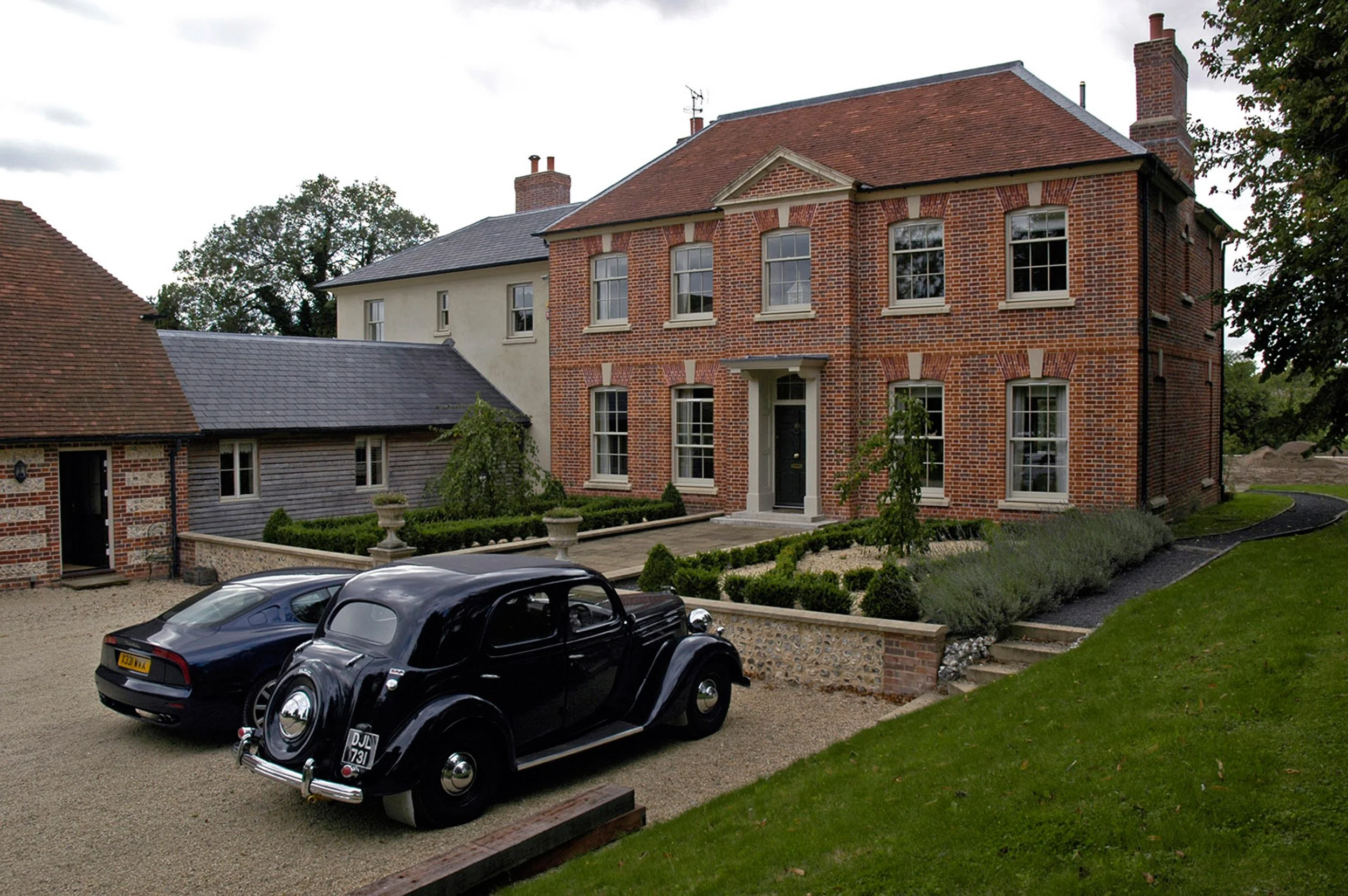
Replacement Dwellings: An Opportunity for Better Design
Replacement dwellings can present a unique opportunity to rethink how a site functions and how a home responds to its surroundings.
Many replacement projects involve buildings that are badly built, visually intrusive, energy inefficient and no longer suited to modern living. While they may occupy exceptional sites, the buildings themselves often fail to realise the full potential of the location.
A carefully considered replacement dwelling can improve environmental performance, create better internal spaces, strengthen the relationship between the building and its landscape, and significantly enhance the long-term value of the property.
By responding to local character, optimising views, improving orientation and creating a more coherent architectural composition, a replacement dwelling can transform both the quality of the home and the experience of living there.
At Alex Oliver Associates, we approach replacement dwellings as an opportunity to create homes that are more sustainable, more functional and more appropriate to their setting.
The objective is not simply to replace a building, but to create a home that adds lasting architectural, environmental and financial value.
The Role of High Ceilings
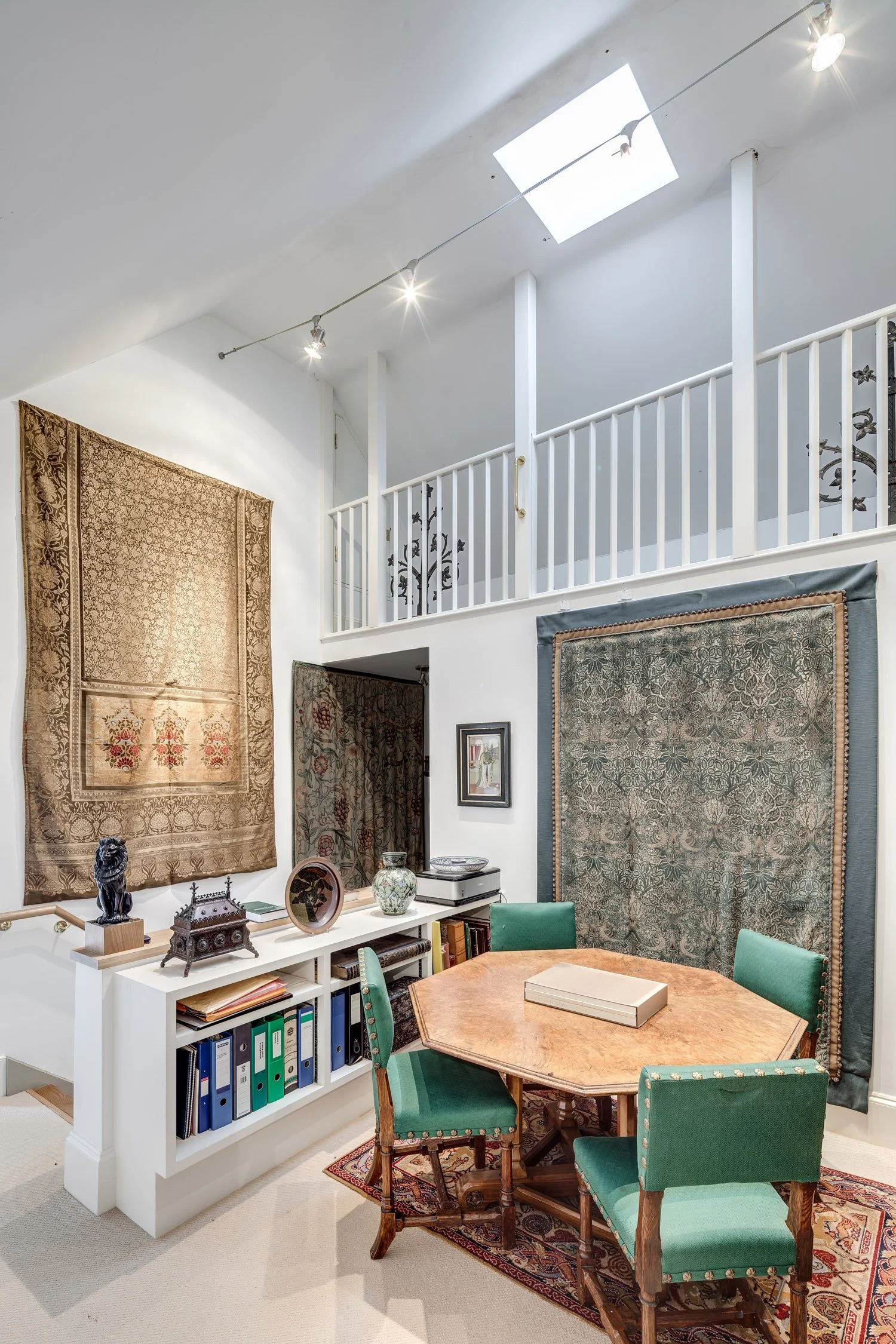
High ceilings are often associated with grand country houses, Georgian townhouses and other traditional buildings. While they undoubtedly contribute to a sense of elegance and generosity, their value extends far beyond aesthetics.
Historically, high ceilings served a practical purpose. They helped improve ventilation by allowing warm air to rise above occupied spaces, creating more comfortable internal environments, particularly during warmer months. They also enabled larger windows, allowing daylight to penetrate deeper into rooms and reducing reliance on artificial lighting.
Many of Britain's most admired historic buildings combine generous ceiling heights with carefully proportioned rooms, creating spaces that feel bright, balanced and uplifting. The relationship between room proportions, window design and ceiling height was often considered as part of a cohesive architectural composition.
As we consider how buildings respond to a changing climate, these traditional principles remain highly relevant. Well-proportioned spaces, natural ventilation and access to daylight can all contribute to occupant comfort and wellbeing.
At Alex Oliver Associates, we continue to draw upon these lessons when designing new homes and adapting historic buildings. Good architecture should not only look beautiful, but also create comfortable and enjoyable places to live.
Traditional design often succeeds because it combines practicality with elegance.
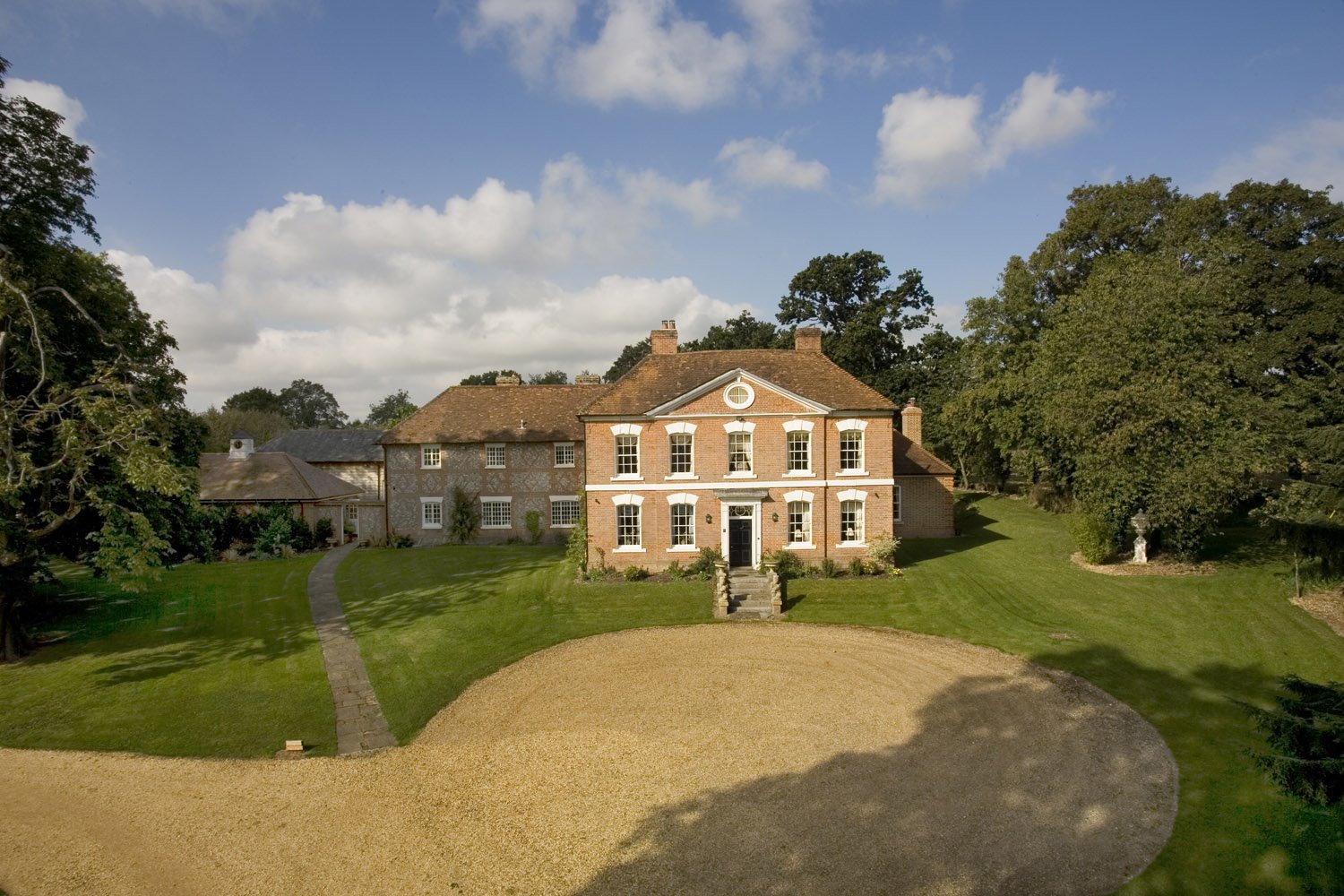
Thoughtfully Extending Listed Buildings
A successful extension should respect the scale, character and architectural hierarchy of the original building while supporting contemporary living requirements. It should enhance the building's long-term viability rather than compromise its significance.
For many clients, carefully considered extensions provide the additional accommodation needed to ensure historic buildings remain practical family homes for future generations.
Good conservation is not about preventing change. It is about managing change thoughtfully.

Sensitive Sites, Exceptional Homes
Some of the most rewarding projects are also the most challenging.
Many of the country homes we design occupy sensitive sites, whether within Conservation Areas, National Landscapes (formerly AONBs), heritage settings or open countryside.
Successful design begins with understanding the site. Topography, views, landscape character, local building traditions and planning policy all influence the design process.
At Alex Oliver Associates, we believe that the best country houses are those that appear rooted in their surroundings, responding naturally to both the landscape and the local architectural context.
Exceptional homes begin with a thorough understanding of place.
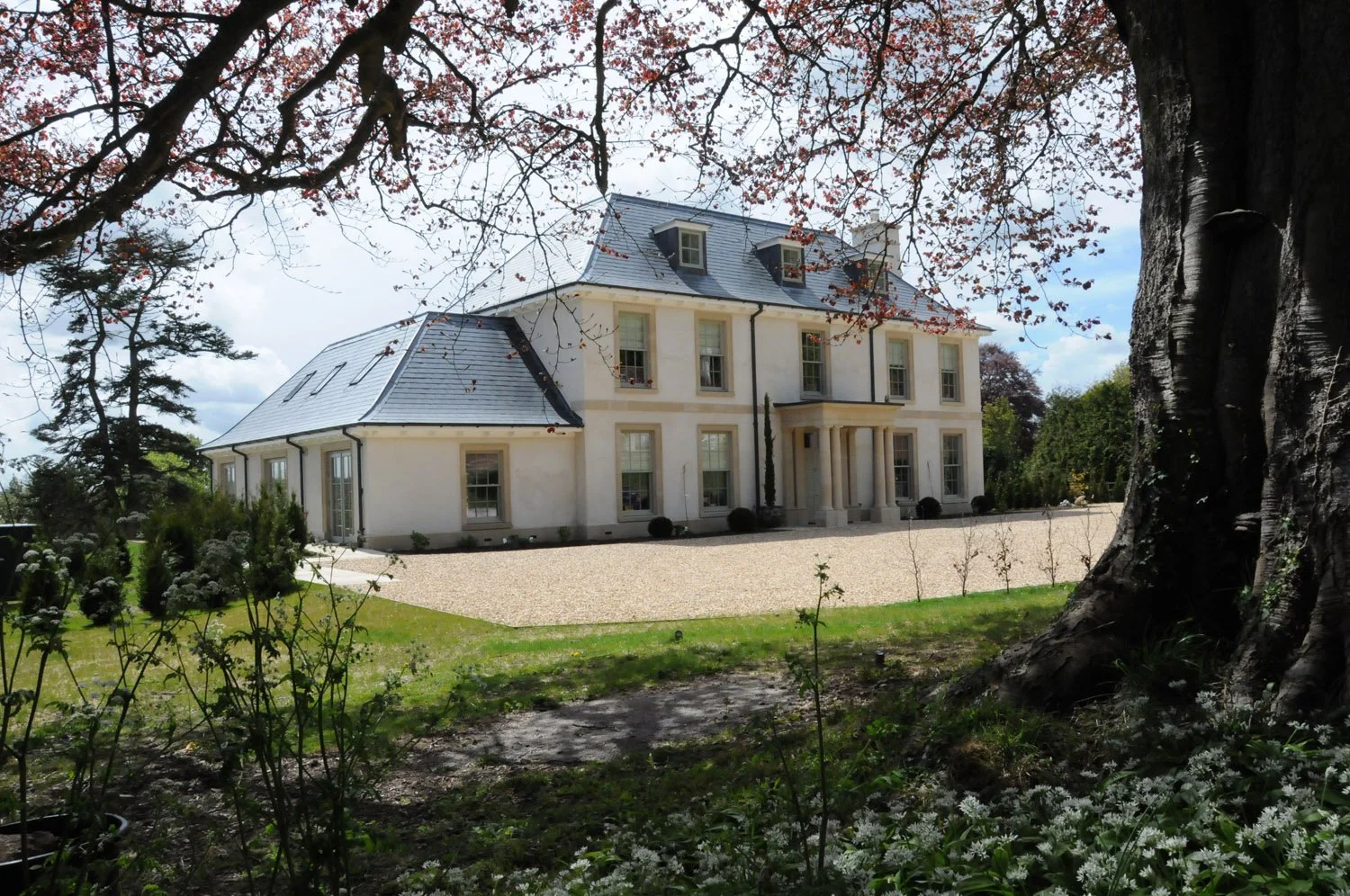
Traditional Architecture
Many of Britain's most loved buildings were constructed hundreds of years ago, yet they continue to feel relevant, attractive and desirable today.
This is not simply a matter of nostalgia.
Traditional architecture is often rooted in principles that transcend fashion: proportion, symmetry, hierarchy, craftsmanship and a strong relationship with place.
These buildings were typically designed to be coherent compositions, where each element contributes to the overall harmony of the design.
While construction methods and lifestyles may evolve, these fundamental principles remain as relevant today as they were centuries ago.
Good architecture does not need to imitate the past, but there is much we can learn from the buildings that have stood the test of time.
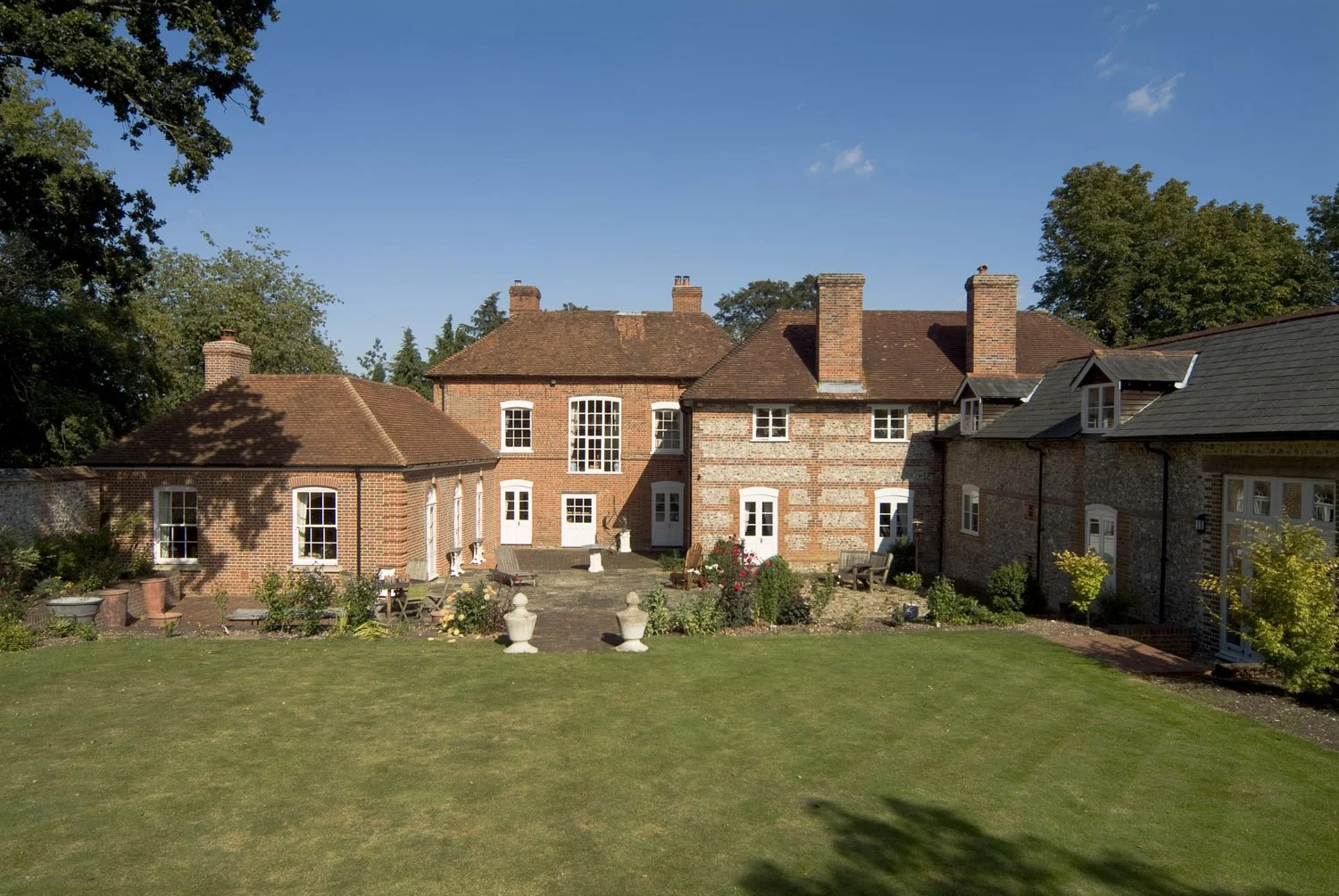
The house pictured is a new-build designed by ourselves, inspired by traditional architecture.
Adapting Historic Buildings for Modern Life
Many of the important Grade I and II* listed buildings we work on were designed for a very different way of living. Today we are often asked to create larger reception rooms and kitchens, improved connections to gardens, better circulation and more flexible spaces for family life.
The challenge is finding ways to introduce these requirements without losing the character that makes historic buildings special. Successful adaptation starts with understanding what is significant about a building and what can change without harming its heritage value.
When approached sensitively, historic buildings can continue to evolve and remain both functional and beautiful places to live.
Combining Architectural Styles
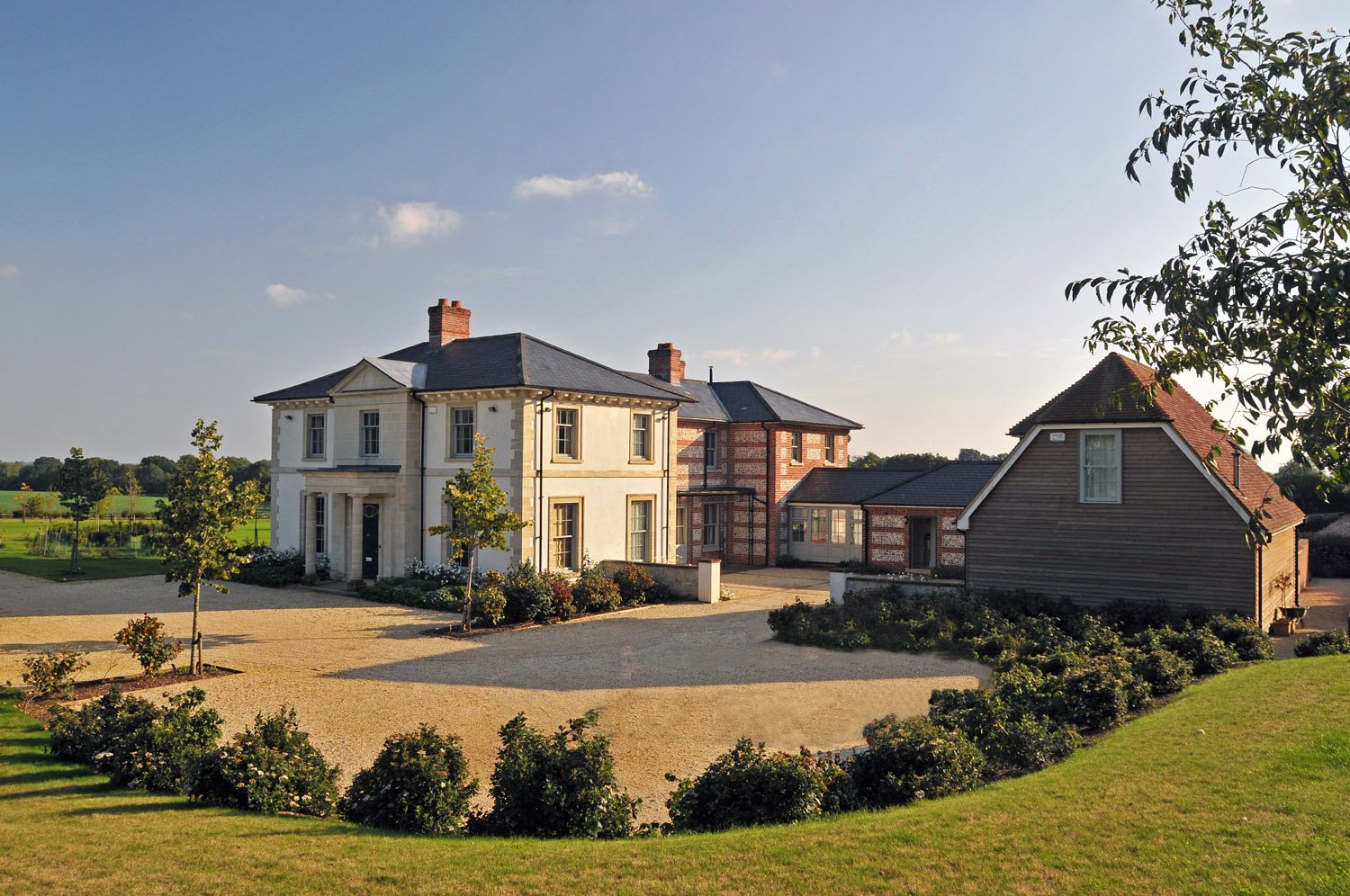
This new farmhouse was designed to feel as though it had evolved over time, effortlessly blending a variety of architectural styles.
While the front elevation has a formal Georgian character, the rear emulates a vernacular farmhouse, constructed from distinctive red-brick and flint banding. The timber-clad garage was also carefully designed to reference traditional agricultural outbuildings.
A Historic Manor Estate
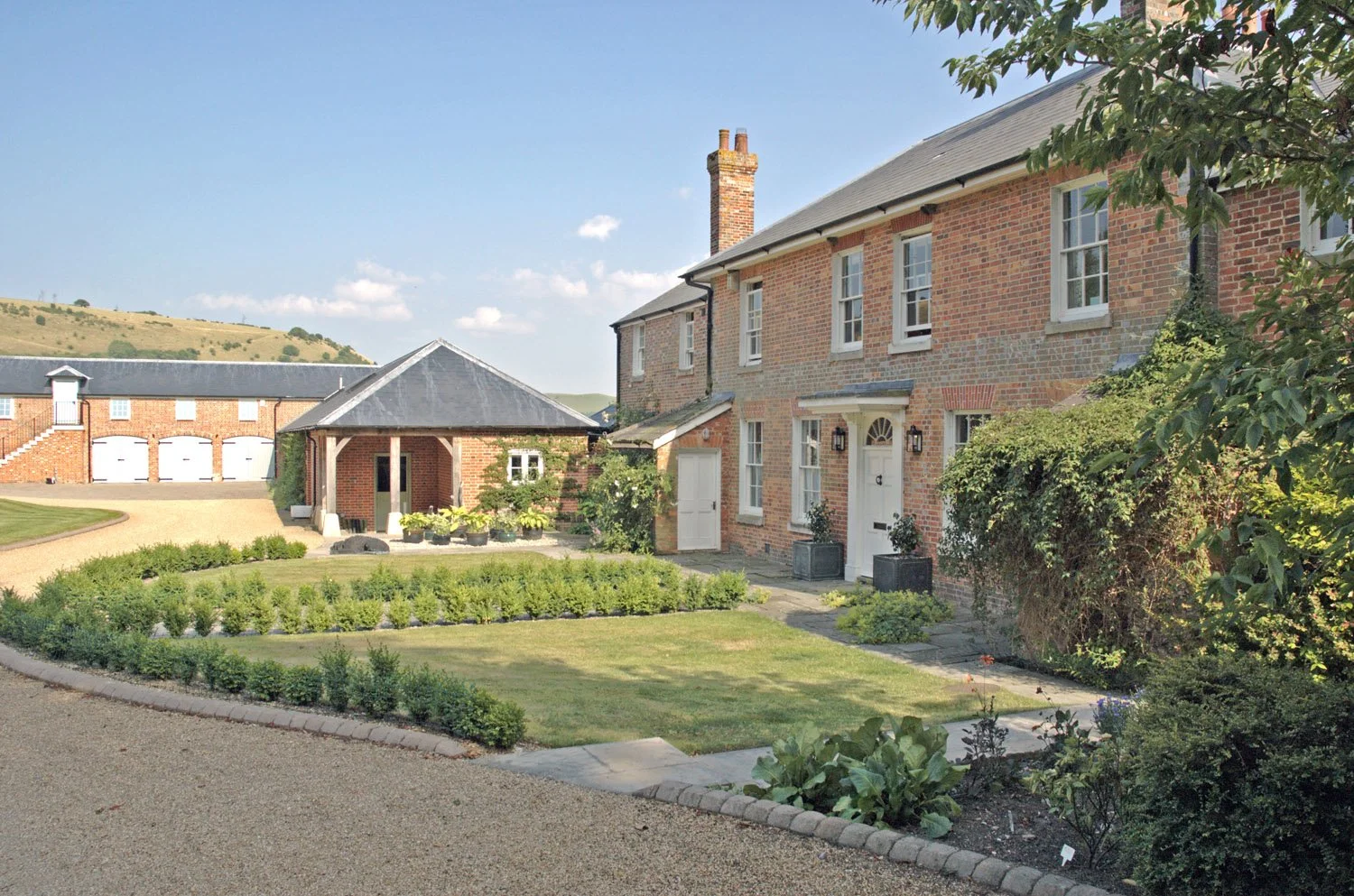
This project involved the comprehensive reimagining of a historic manor estate, transforming both the principal house and the surrounding courtyard.
The manor underwent significant internal reordering to better serve modern living requirements, while respecting its architectural character and historic fabric. These carefully planned extensions blend seamlessly with the original structure, creating a harmonious connection between old and new.
Sustainable Design
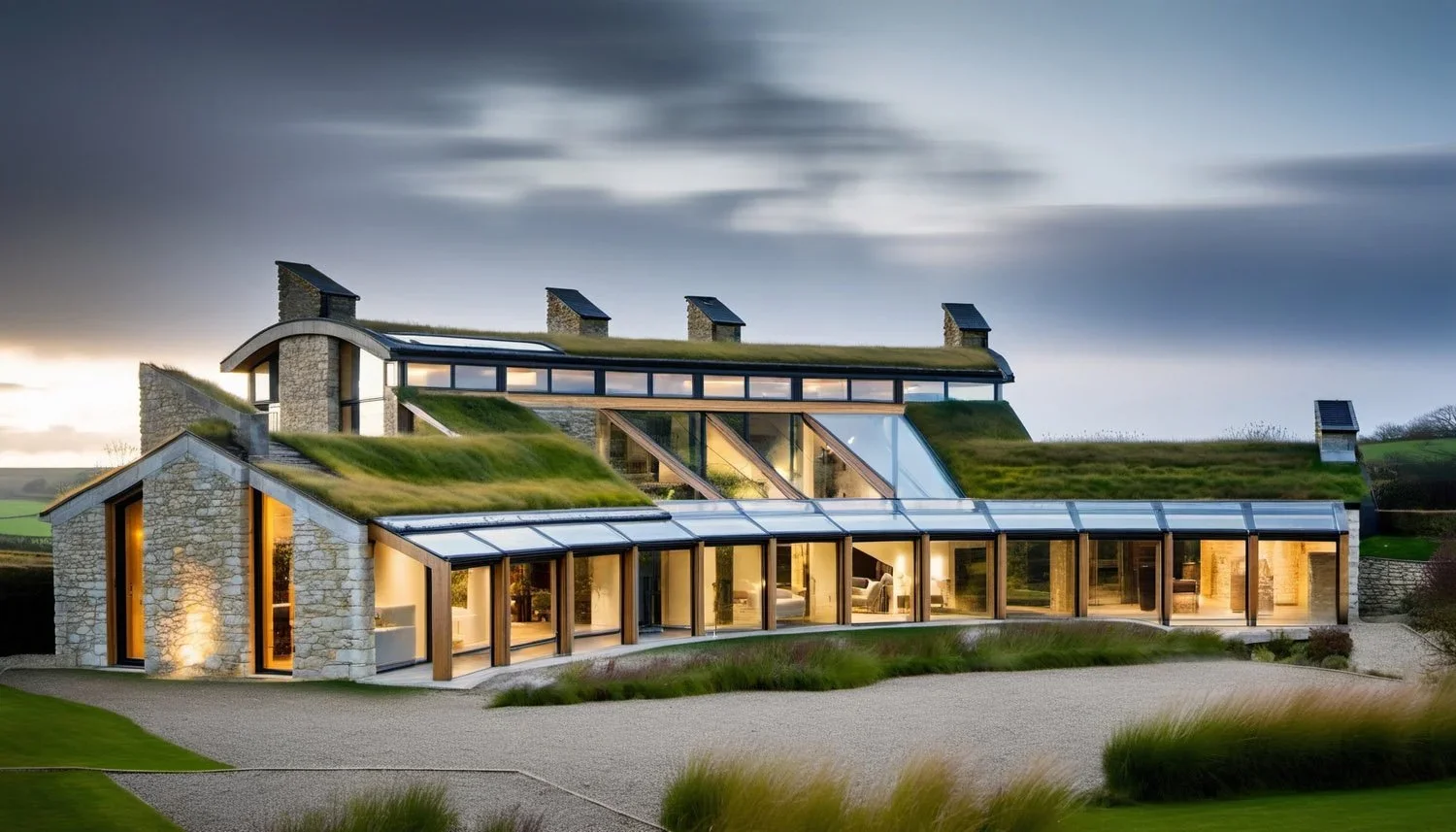
Designed for a private client, this innovative passive house is carefully positioned within the unique setting of a disused lime quarry. The building’s form was meticulously planned to respond to the sun’s path, allowing southern light to flood the interior while the highly insulated northern façade, with minimal glazing, reduced heat loss. The curved, linear design followed the natural contours of the quarry, stepping gracefully into the landscape.
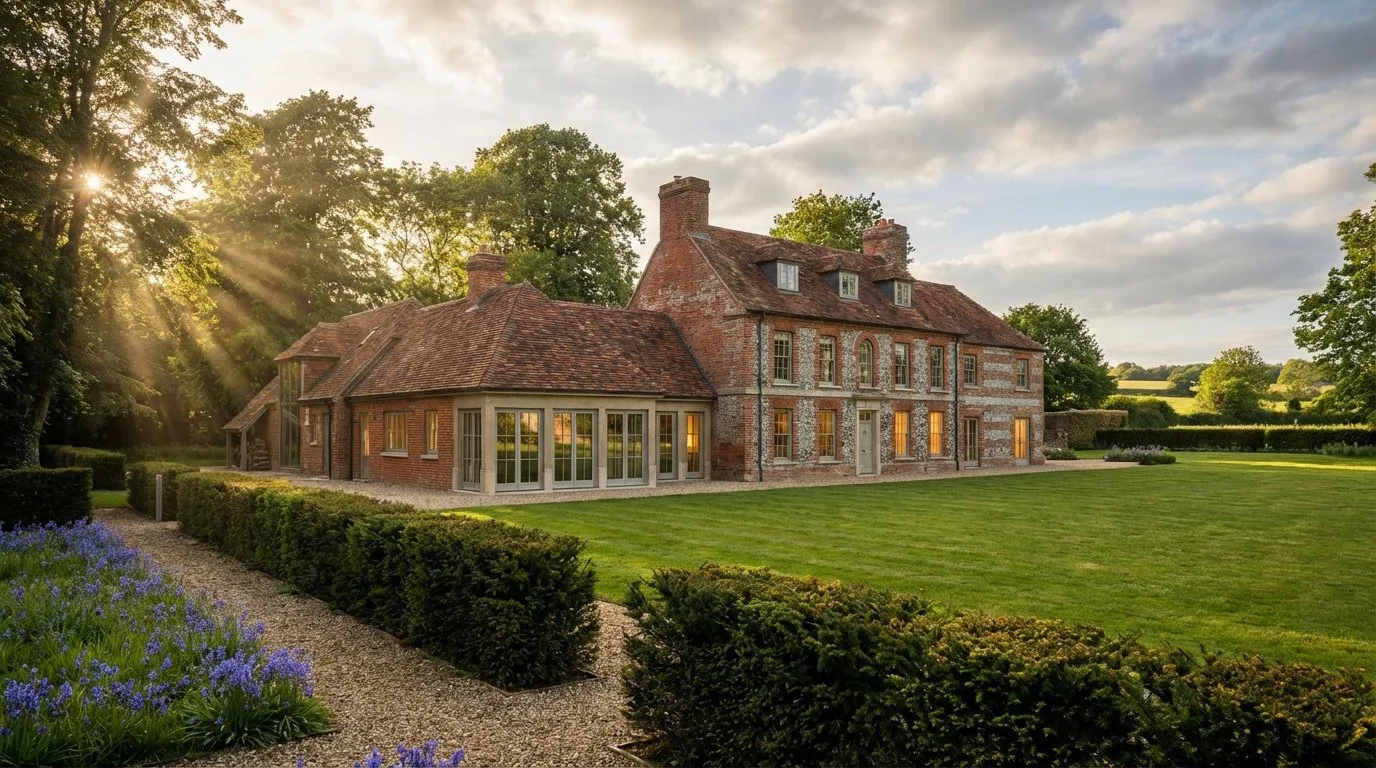
A Traditional Farmhouse in Wiltshire
Situated within the North Wessex Downs AONB, this replacement dwelling reinterprets the Georgian country house with a more understated, relaxed character.
Classical proportions are combined with informal, light-filled spaces to create a home that balances the charm of farmhouse living with timeless elegance.
The result is a design that brings together order, comfort and flexibility, tailored to modern country life.
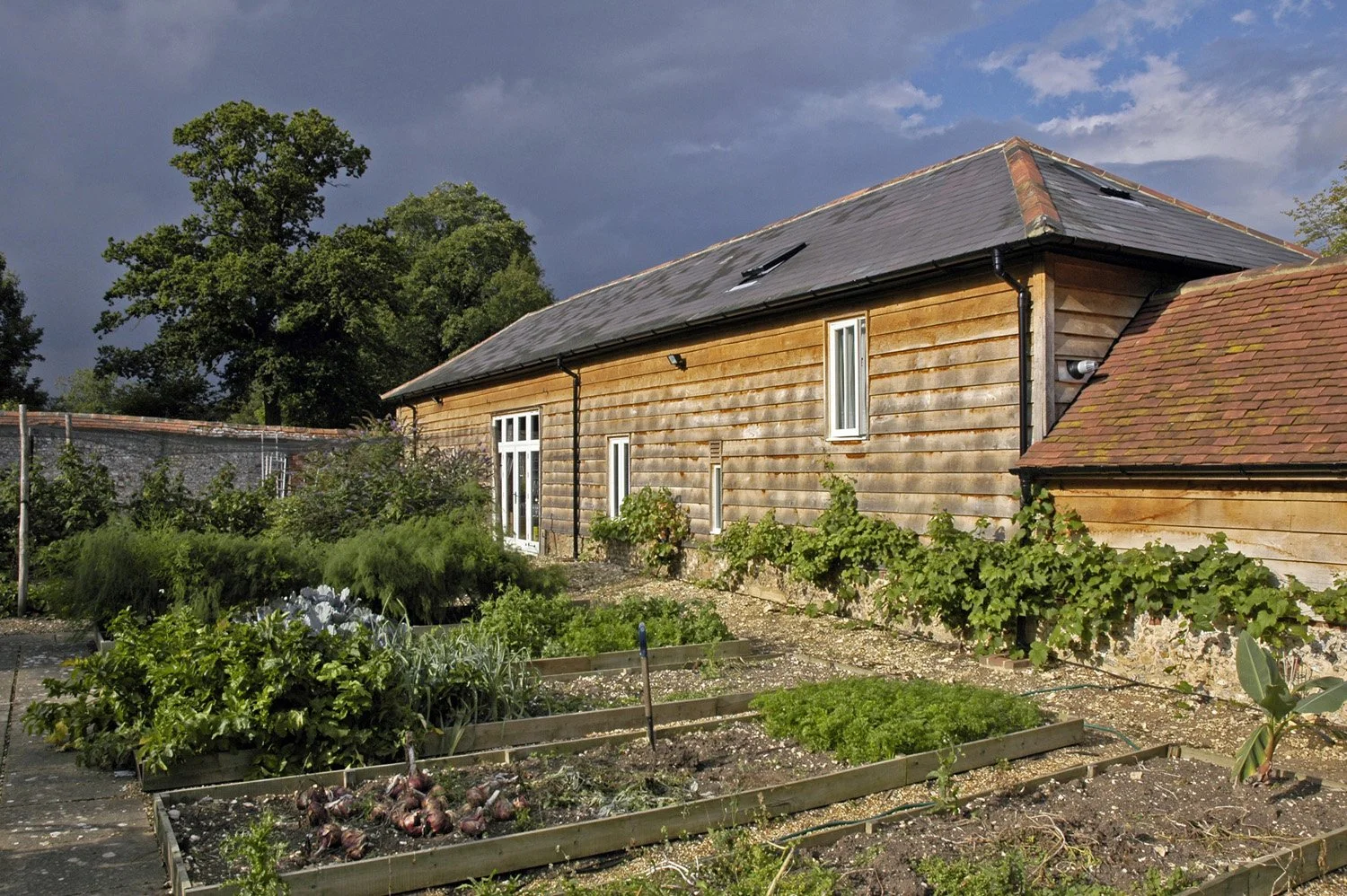
A Grade II Listed Barn
This Grade II Listed barn has been thoughtfully reimagined as additional residential accommodation, comprising a family room, playroom, cloakroom, and a self-contained guest annexe.
We prioritised the preservation of the barn’s historic character and integrity, with sensitive adaptations to support modern living. Key historic features have been left exposed, including the structural timber frame, trusses, plates, studs, and diagonal tiles.
New interventions, such as bespoke timber windows, have been introduced with careful consideration, complementing the building’s character and heritage while enhancing its performance.
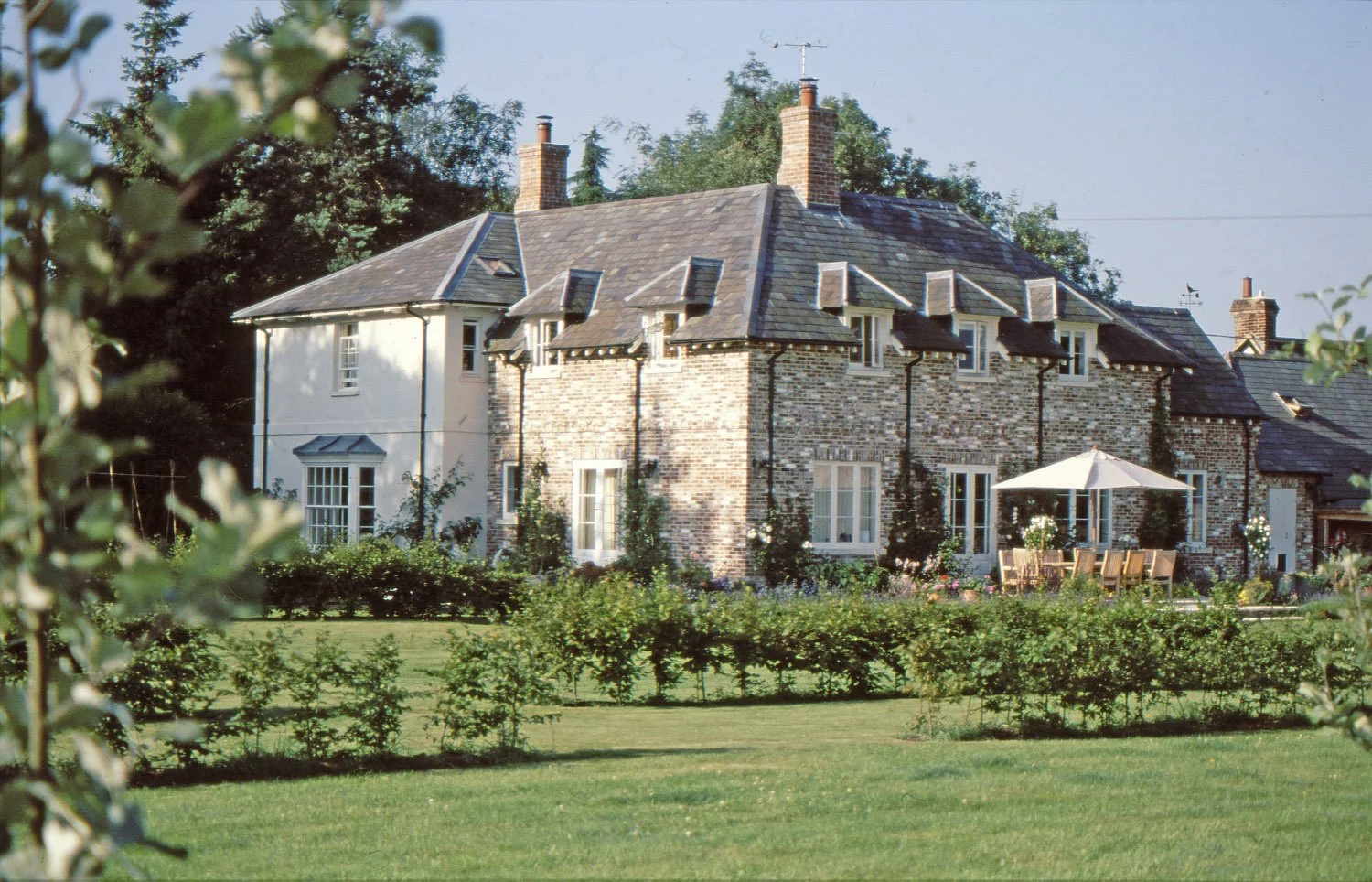
A New Regency Home in Wiltshire
This new Regency home in Wiltshire combines classical elegance with local vernacular charm to create a space that is versatile, welcoming, and highly appealing.
The front of the property is characterised by a formal, stucco-fronted façade that captures the grandeur and symmetry typical of Regency architecture. In contrast, the rear part of the house adopts a more vernacular style, blending seamlessly into the surrounding landscape and offering a charming, rustic counterpoint to the formal front. This approach creates a harmonious balance between the stately presence and elegant proportions of the Regency style and the cosy, approachable feel of vernacular architecture.
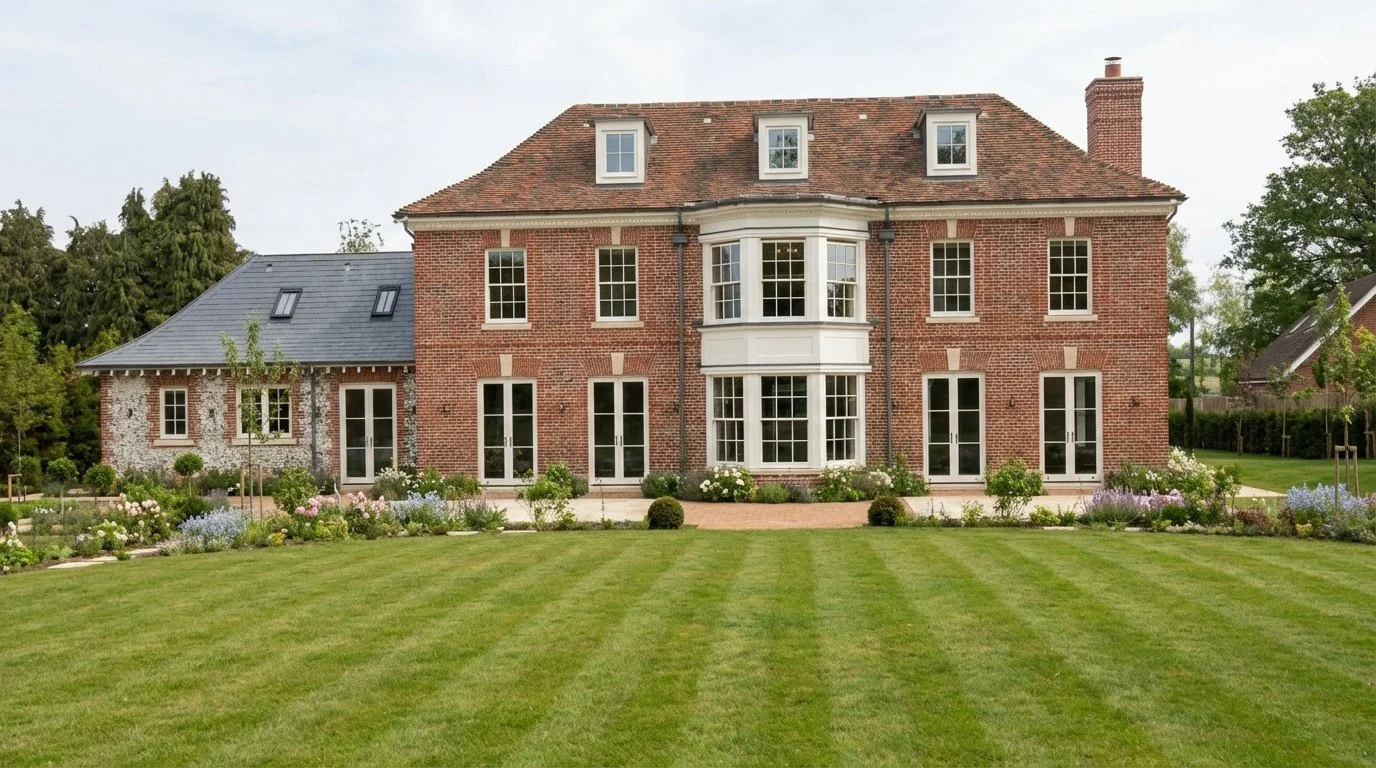
A Classical Country House in Surrey
Flint has been a staple of British vernacular architecture for centuries, particularly in the South of England. Whether used in traditional flint-knapped walls or as a striking feature in contemporary builds, this locally sourced, highly durable material adds character and texture.
This classical country house in Surrey demonstrates the distinctive visual appeal of flint, especially when paired with brick. The single-story flint wing creates an interesting contrast with the adjacent brickwork, enhancing the building’s character and appeal.
A Modern Interpretation of the English Country House
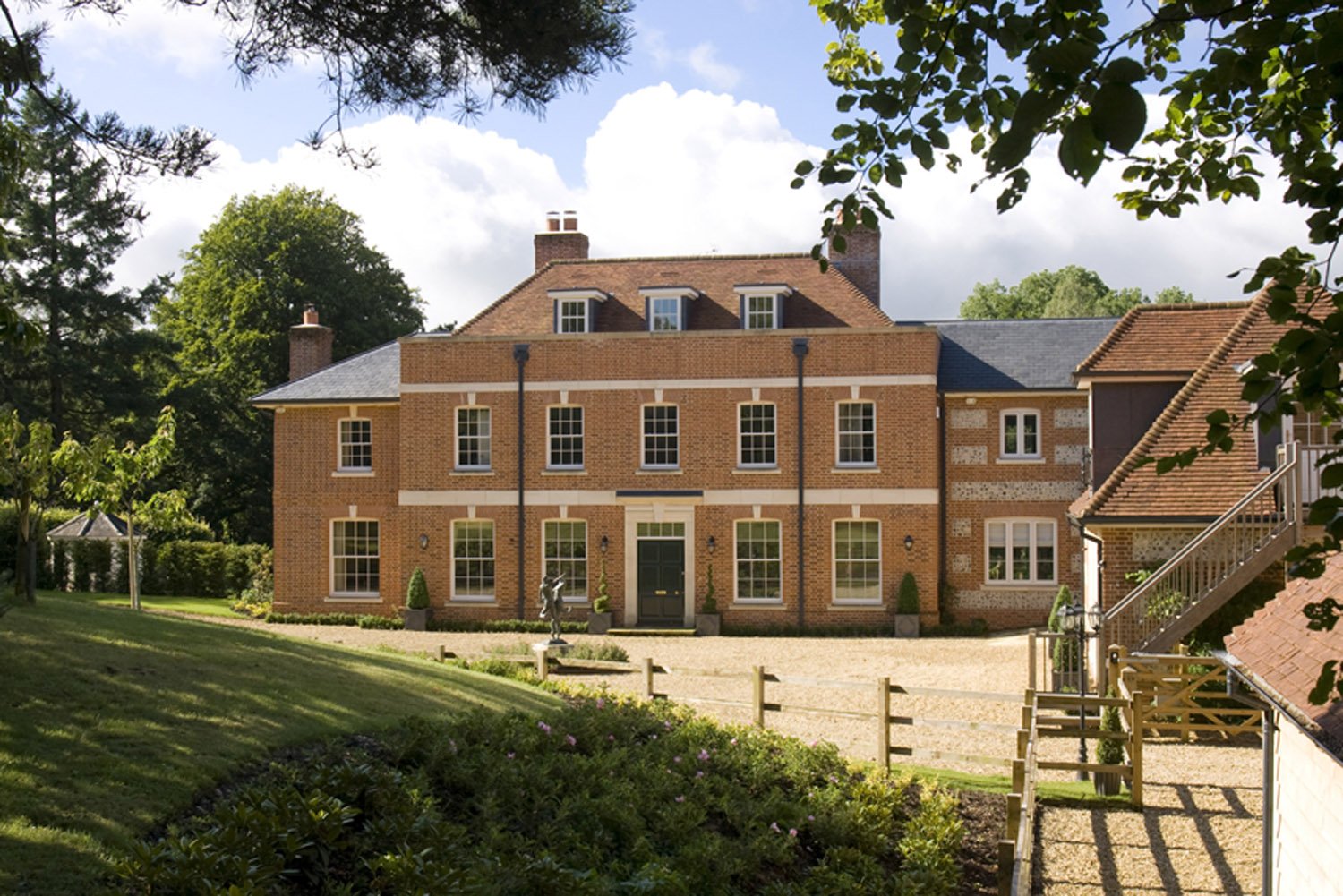
Set within idyllic gardens and woodland, this elegant country house in Berkshire was designed to replace a modest 1960s home.
This ‘Queen Anne’ style residence is a modern interpretation of the traditional English country house and features a grand entrance hall, high ceilings and meticulously detailed façades.
Replacement Dwellings
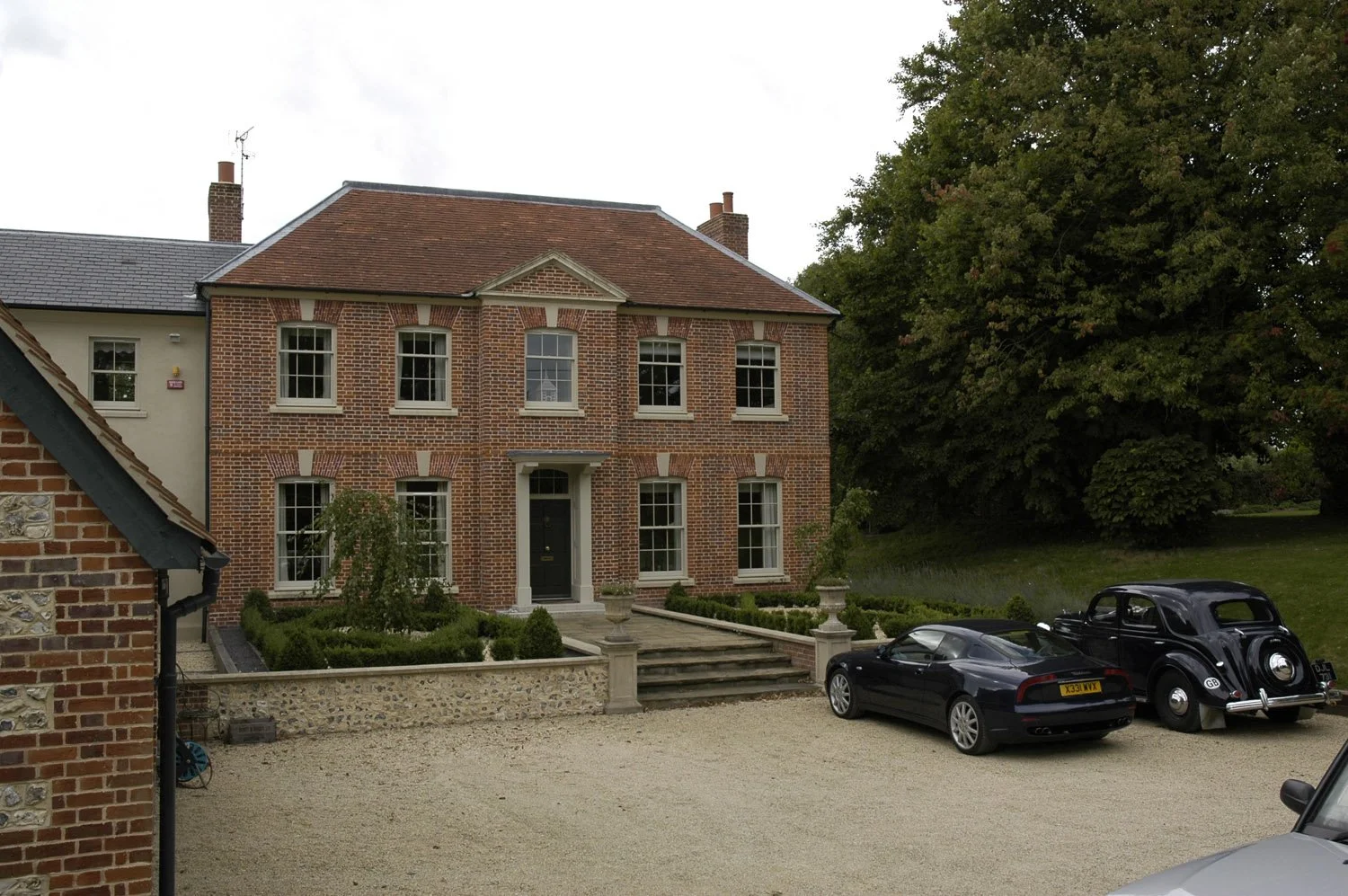
Replacement dwellings can present an exciting opportunity to transform a site and design a new home that responds the character of the local area.
The site of this elegant Georgian-style farmhouse in the Test Valley was previously occupied by an unappealing 1960s/70s house. The new farmhouse has been carefully designed to reflect the local vernacular character and to sit comfortably within this picturesque conservation area. The historic wing at the front of the house has been repaired and now serves as a charming annexe.
A Country House in Hampshire
Every design we produce is tailored to the site it is to be built on.
This stunning new country house in Hampshire is designed to make the most of its elevated position, with the kitchen featuring large glass windows which provide full, uninterrupted views to the south.
The external materials were carefully selected to harmonise the house with the surrounding landscape, which creates a sense of belonging.
A Regency-Style Home in Wiltshire
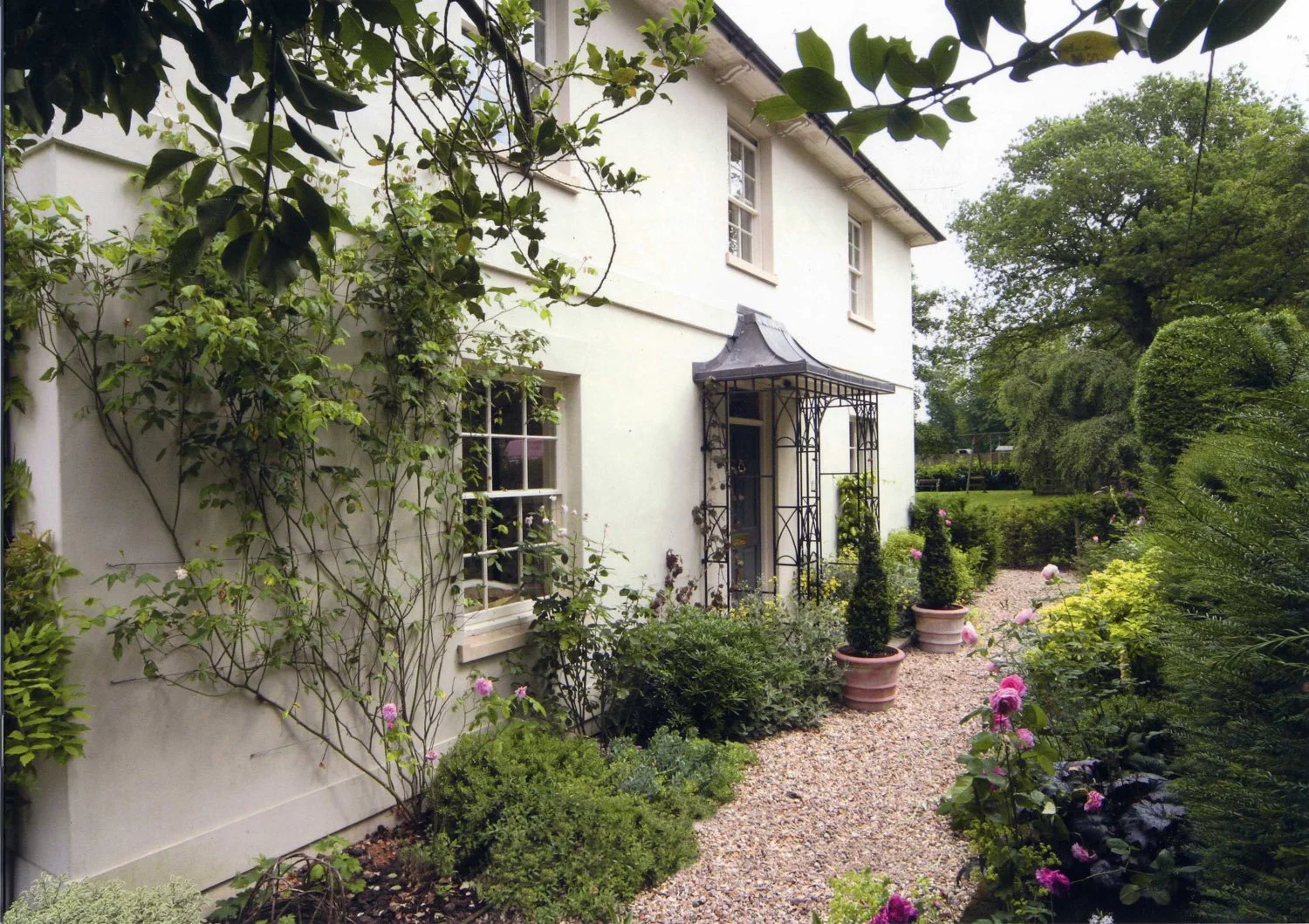
This country house in Wiltshire combines classical elegance with modern functionality, resulting in a living space that honours tradition while embracing modernity. The front of the property is characterised by a formal, stucco-fronted façade that captures the grandeur and symmetry typical of Regency architecture. Well-proportioned windows and an elegant metal-lattice porch enhance the impression of refined sophistication.
A Traditional Country House in Wiltshire
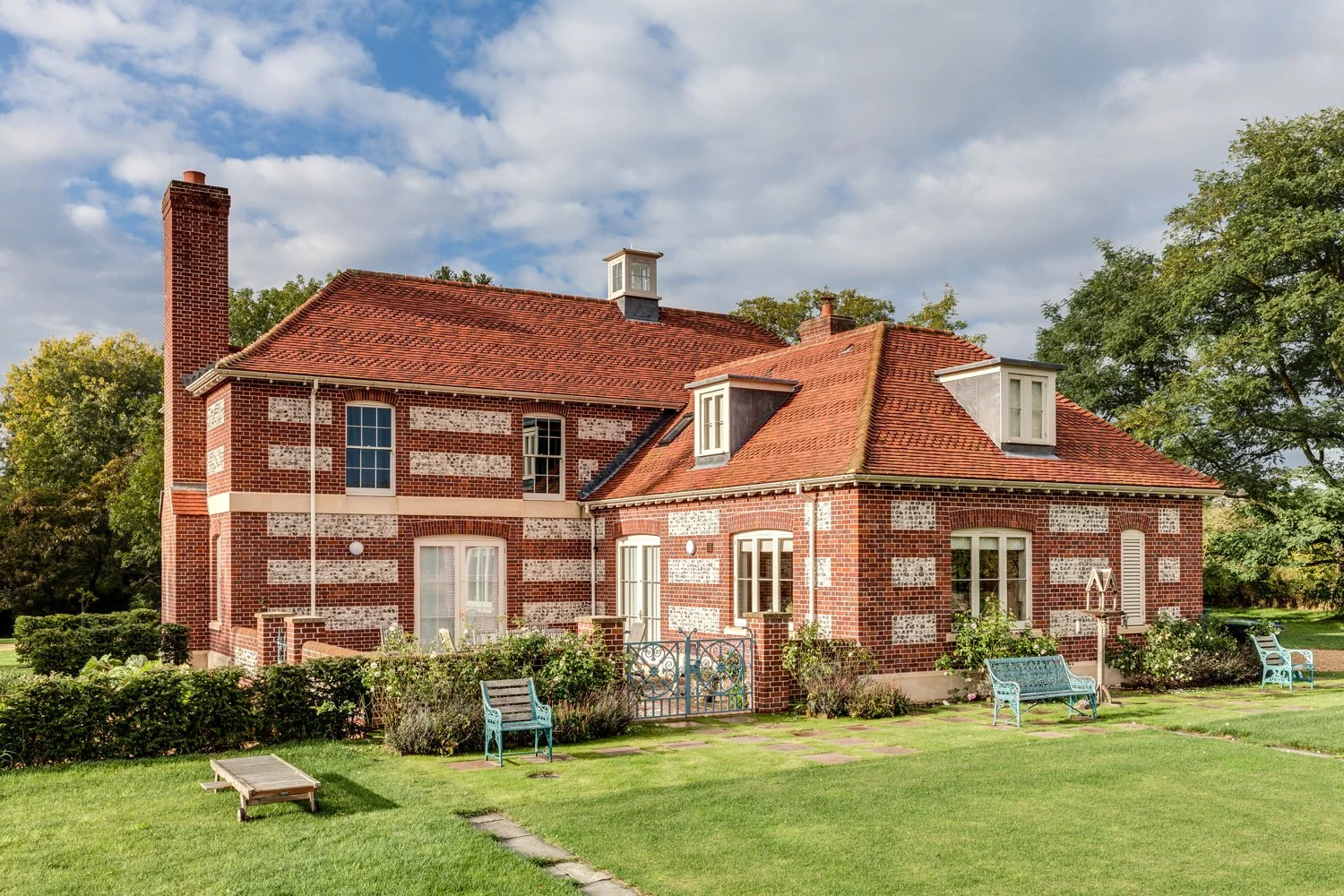
Situated in the picturesque Wiltshire countryside, this traditional country house has been carefully arranged with living spaces around two sides of a South facing courtyard garden.
The positioning of the rooms is informed by the sun path, maximising natural daylight where it is required, when it is required.
For example, the sun penetrates into the ground floor bedroom in the morning, into the kitchen during most of the day and into the drawing room from mid-morning through to the evening.
Combining Architectural Styles
This new farmhouse was designed to appear as if it had evolved over time, combining a mixture of architectural styles. From the front, the house has a formal Georgian character, with large sash windows and an elegant portico. The rear section was designed as a vernacular farmhouse, constructed from distinctive red-brick and flint banding. Similarly, the timber-clad garage was designed to emulate an agricultural outbuilding.