
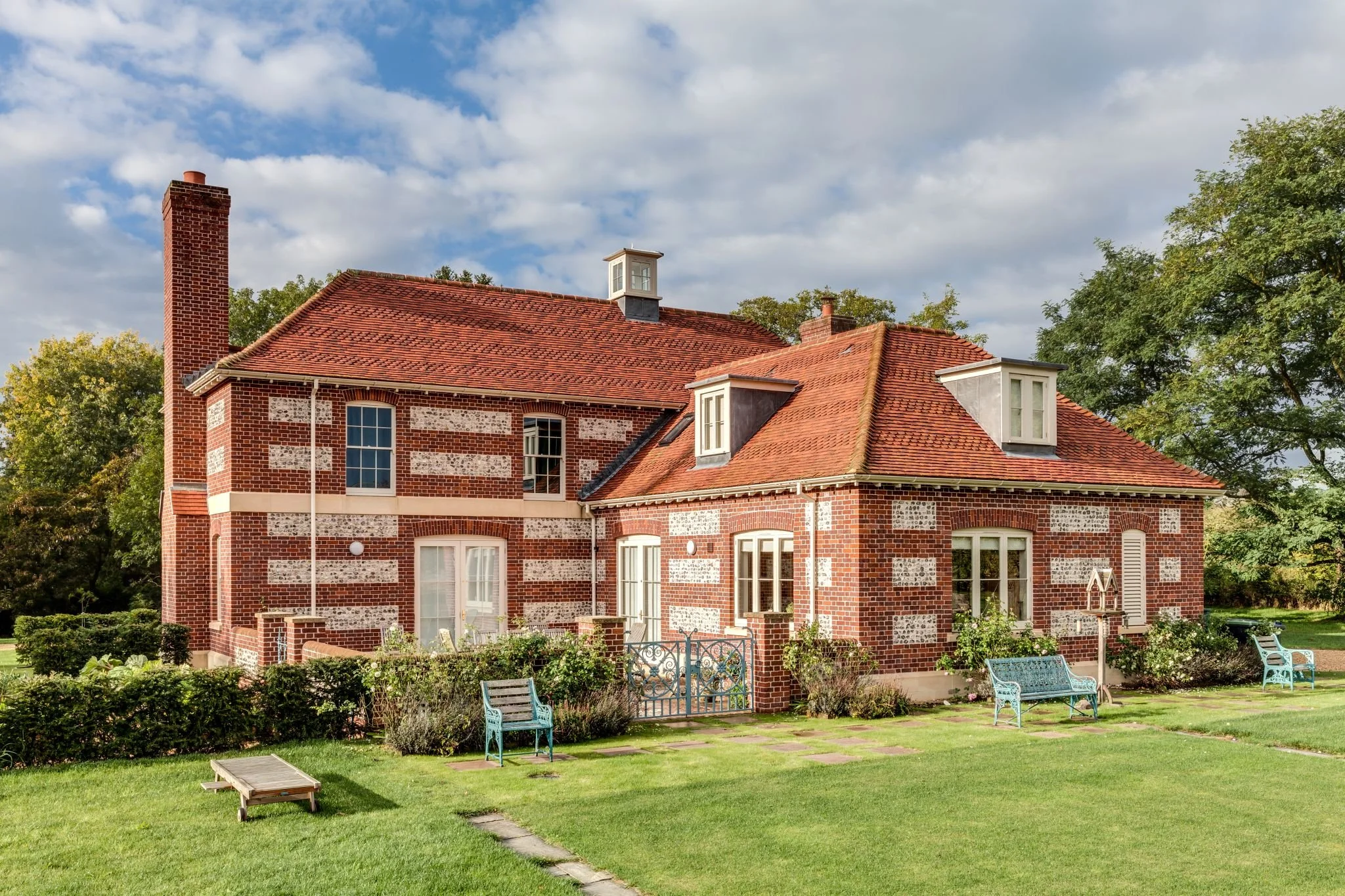
Our Award-Winning Project in Wiltshire
“One of the most impressive examples of the difficult art of traditional new build that has been built in the UK in recent years”.
Not our words, but the kind description of Jason Orme in his article about this award-winning home we built in Wiltshire. The brief was for a modestly scaled house but with high ceilings for the client’s furnishings. The client was delighted with the result and it remains a firm favourite in the office.

Designing Shopfronts
Time can be unkind to buildings, they are modified and changed as time and requirements dictate over the years. Listing a building stops further harm happening, but does not undo the wrongs of the past. Sometimes an opportunity to can arise however to do so.
The pair of buildings, one 17th century and one 19th century had been modified on the ground floor to provide a single unified frontage for a car dealership. When this closed, our clients looked to convert the building back to shops and we were tasked with designing a more appropriate pair of shopfronts, more suited to the individual buildings.
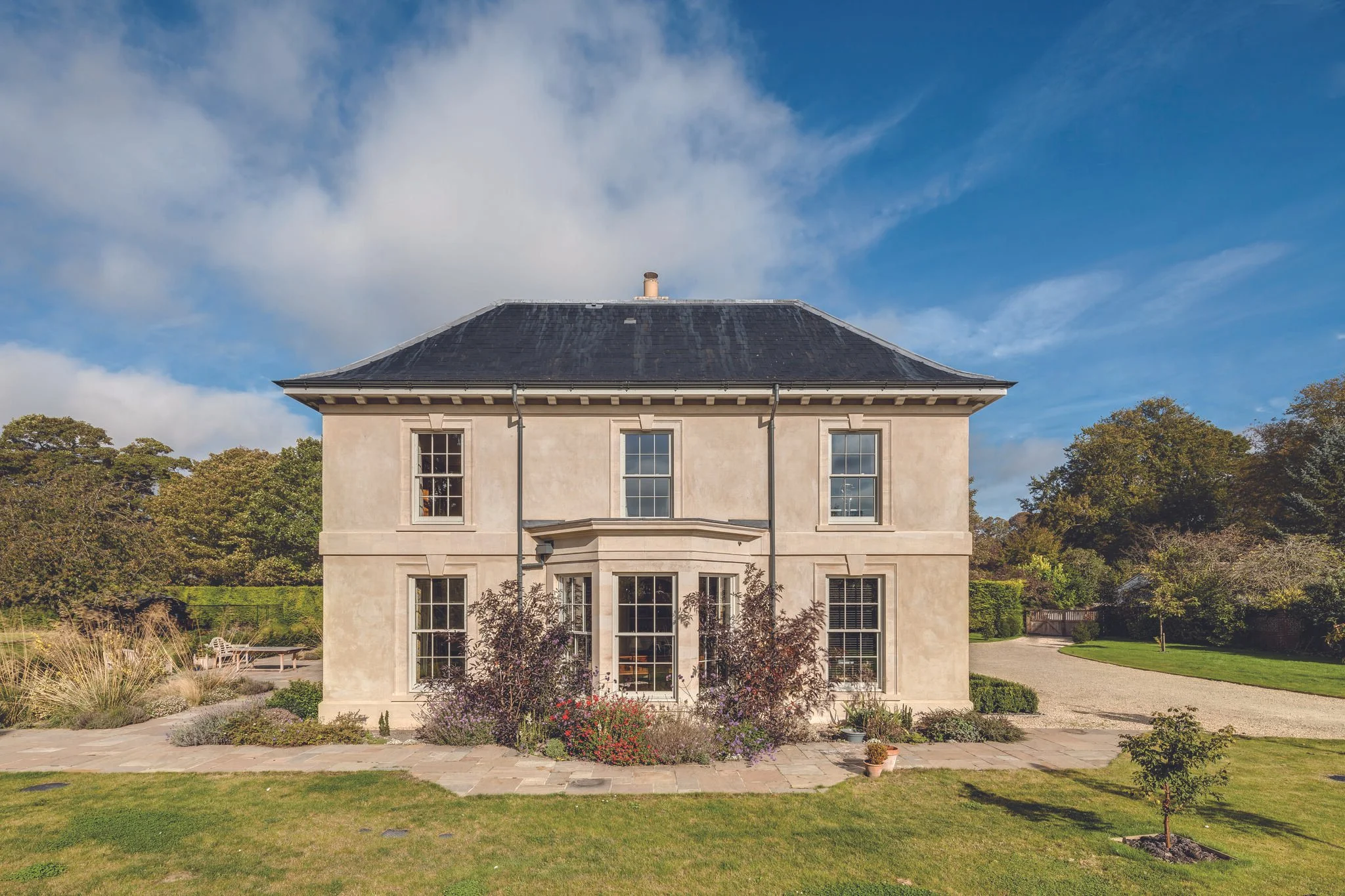
Designing for Beauty and Elegance
When we design homes we are always striving for beauty and elegance whilst maximising value area. Including accommodation floorspace within the roof structure can provide useful additional area, but can make the roof look quite bulky. To avoid the roof looking bulky, we often introduce dormers, rooflights and sprocketed eaves.
Introducing a sprocketed eaves can help to disguise the mass of the roof and provide a deep eaves to cast a pleasing shadow on the façade of the building. This award winning home in Wiltshire includes three storeys of accommodation but the gentle change of roof pitch (the sprocket) as it runs up helps visually lighten the mass this extra floor would normally create.

The Golden Ratio
A ratio of 1:1.6180339887 doesn’t sound very glamorous, but this ratio, better known at the Golden Ratio, or the Divine Proportion underpins Classical architecture.
We take this principle very seriously and it underpins our work in the New Classical genre. This new house we designed in Hampshire has elevations carefully designed to Gold Ratio proportions. The result is a truly aesthetically pleasing family home which is a much admired part of our portfolio.

Considering the Environmental Impact of Buildings
Just because a home looks traditional, doesn’t mean it can’t be environmentally friendly. The need to consider the impact of buildings on the environment becomes ever more pressing with each passing day
We’re committed to reducing the impact of schemes using a variety of approaches. Like this country house in Wiltshire where a vaulted gallery space on the first floor has the double function of filtering light onto the items within, but also providing passive stack ventilation.

Extending a Listed Building
There are different approaches that can be taken when extending a listed building. Alterations can be designed to contrast the historic building or to complement the existing fabric. Careful judgement is required to develop the right strategy for the building and the client.
For this Grade II* listed property in Hampshire, the right solution was to compliment, whilst remaining subservient to the original Queen Anne house.

A Georgian Style Property in the Test Valley
People often assume windows must be white, but that isn’t the case. There are many historical precedents for windows being coloured, throughout the history of architecture.
This Georgian style property we designed in the Test Valley has its windows, door case and porch painted in a pastel colour. This keeps the joinery feeling light and bright but without the starkness that brilliant white can sometimes bring.

Symmetry and Balance
A lot of the pleasure of traditional architecture is the aesthetic pleasure that symmetry and balance of the elevations can bring to the eye. Where buildings are joined to others as part of the same composition, differing ownerships and approaches to maintenance can lead to this balance being upset.
The careful restoration of our Grade II* listed Georgian town house project brought harmony and symmetry back to the building by treating the elevation as a whole piece rather than two separate halves. Elegance is restored.
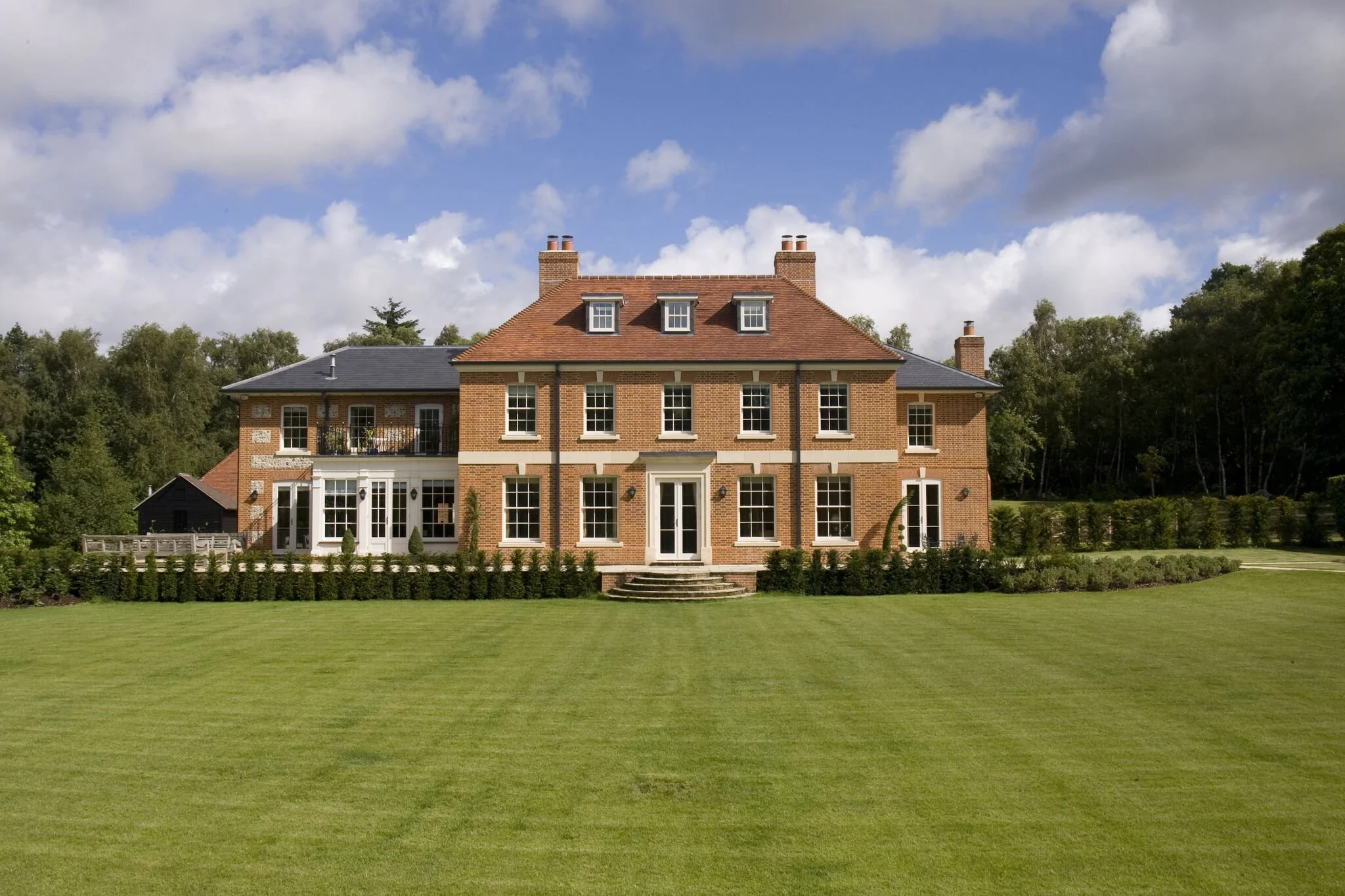
From an Understated Bungalow to a Classical Country House
Seeing the potential in sites can sometimes be difficult, an underwhelming house in the wrong place on the plot can cloud someone’s judgement. We relish the challenge of looking beyond the existing to create a dream property whilst is perfect for the site.
A good example of that is this project in Berkshire we designed which replaced an understated bungalow with a Classical country house. The resulting house is much more suited to the parkland like gardens and sylvan setting of the property.

A Lattice Porch for a Regency Style Home
Elegance doesn’t have to mean grandeur.
We strongly believe that buildings can be elegant without having to be ostentatious. A home which looks relaxed will help the family living in it, feel relaxed. An example of how we employ this idea is this metal lattice porch on the front of a new build Regency style home we designed in Wiltshire. The entrance to this classic three bay form is clear and in keeping, without being overtly grand, making the whole building look more comfortable on the village lane on which it sits.
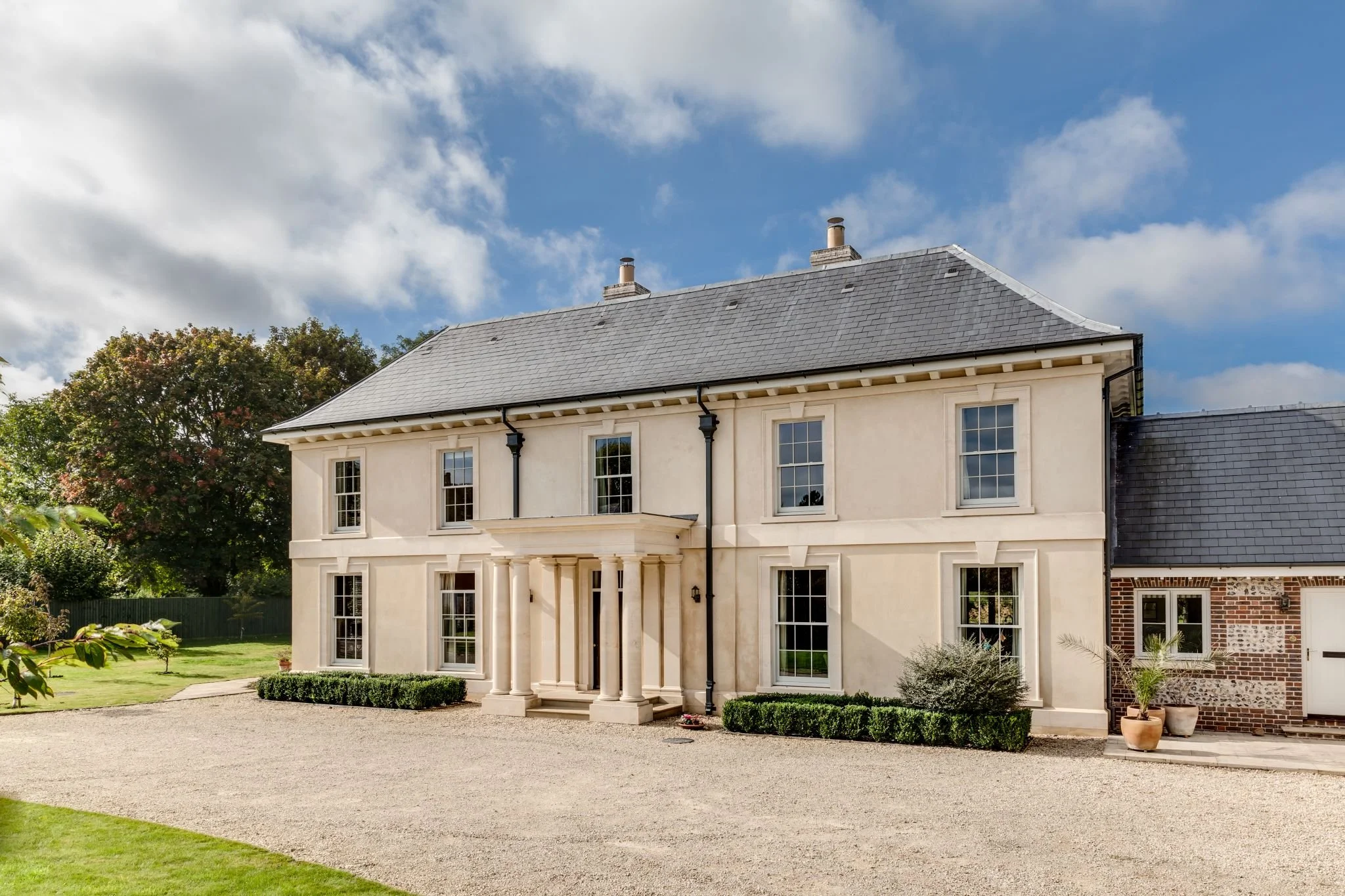
Design and Location
Context is key to a building feeling grounded in its location.
Although inspired by its surroundings, this award winning family home in Wiltshire does not borrow directly from its delightful Georgian neighbours. The design is instead the result of of the application of general principles of Georgian architecture. The outcome is a relaxed and pared-back design which is both comfortable as a modern family home should be, but with the elegance that comes with Classical architecture.

A New Country House in Hampshire
Sometimes the success of the new hinges on the past. We incorporate character into our new buildings by using materials specific to the local area, this allows them to sit more comfortably within their surroundings. In this case we used Chilmark stone from Lovell Stone Group, Michelmersh Brick Holdings PLC bricks and local flint.
This new country house in Hampshire was designed to appear as though it had evolved over time. The rear section was designed and details as a vernacular farmhouse, with the front section having a more formal Classical character, reflecting the evolution of many historic farmhouses, where their owners became more affluent and wished to enhance and gentrify their homes.

An Elegant Staircase Design
Another country house, another elegant staircase design.
For this project we designed this beautiful staircase which showcases traditional detailing at its best. The traditional wreathed volute at the end of the oak handrail compliments the single curtail of the bottom step and juxtaposes these traditional Georgian details with more contemporary metal spindles.

The Portico of an Elegant Grade II* Listed Town House
First impressions count. First impressions for a home, really count.
The portico of this elegant Grade II* listed town house was in need of some real tender loving care before we started our restoration project. The restored timberwork provides the sort of entrance you would expect and really sets the tone for the beautifully restored interior within.

The Importance of Proportion
We are passionate about proportion. Get it right and the elegance it creates is a given, you accept that things look right. Get it wrong and the fact something is amiss is obvious. The Golden Section (or Ratio) is a proportion system we often apply, using the mathematics of nature as described in the Fibonacci sequence, seen throughout nature and in Classical architecture. We used the Golden Section to get the proportions just so for this house in Wiltshire, and we were pleased when it won Best Traditional House in the Daily Telegraph Homebuilding and Renovating Awards The Telegraph.

Transforming a Country House Built in 1908
Sometimes a client comes to us with an existing property which may look like it’s been altered too much to make something promising out of what’s there. Looking closely can sometimes give the germ of an idea for a rescue rather than a rebuild.
This 1908 country house in Wiltshire had been much modified over the years, but the striking gable of the original proved to be an excellent starting point for a triple gabled reworking as seen here in these before and after photos. Brickwork painted in a carefully selected shade, better proportioned timber sash windows and a reclaimed Welsh slate roof have completed the transformation.

Attention to Detail
How much detail is there in a staircase?
Quite lot as it happens. The staircase in this award winning home we designed in Wiltshire is the result of careful decisions over lots of details. A cut string. Scotia mouldings. Full height balustrade. Rotated spindles. Contrasting finishes between riser, tread and string. All these decisions and more come together to create the design we were looking to build, the trick is to make it look obvious and therefore simple…
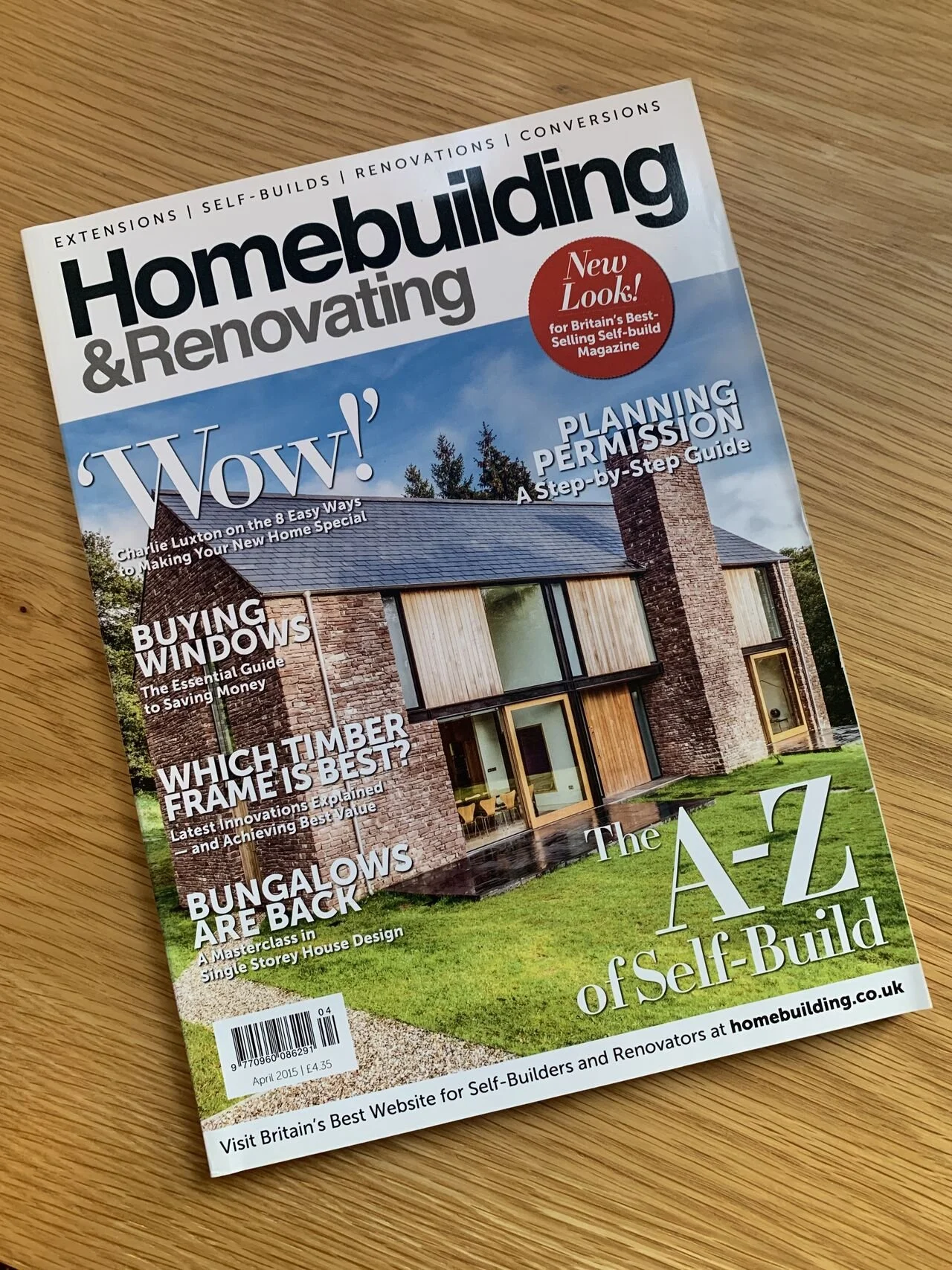
A Feature in Homebuilding & Renovating
We think Georgian architecture is gorgeous, so we were very pleased when Jason Orme applied the same term to our work in the title of his article about one of our country house projects in Wiltshire. The article, in the April 2015 issue of Homebuilding and Renovating Magazine, illustrates this beautiful family home across 9 pages with pictures by Simon Maxwell.
The beginning of the article sums up our approach to this style of home perfectly... "Creating a well-executed new home in traditional style requires the services of a skilled designer and a willingness to stress about the details".

Proportion and Form
When working in traditional styles of architecture it is important to get things ‘right’. Many different elements need to coalesce correctly for the finished scheme to look comfortable.
Take for example this country house in the North Wessex Downs AONB. Carefully modelling the form of the house by breaking the mass of the building into two forms with different but complimentary looks, rather than simply using the same style of all elevations gives the overall scheme a more interesting aesthetic of contrast that reflects a narrative of development over time.
The application of the Golden Section ratio to plan, elevation and openings of the building ensures comfortable proportions in keeping with traditional forms. Careful selection of materials (reclaimed brick, render and timber windows) allows the building to feel grounded and ‘at home’ on the site from day one.
All of these carefully considered choices add up to a whole greater than the sum of its parts.

A Classical Portico
There’s just something very welcoming about a portico. Not only does it provide shelter from the rain when opening the door on a purely practical level, but aesthetically it also provides depth and interest to the façade of a building.
A portico can also set the tone of the experience of being in the building, from the very grand and formal, to the more relaxed and welcoming as seen here. The portico on this country house in the South Downs is elegantly restrained so as not to feel overpowering and is immaculately executed by Agincourt Contractors.