
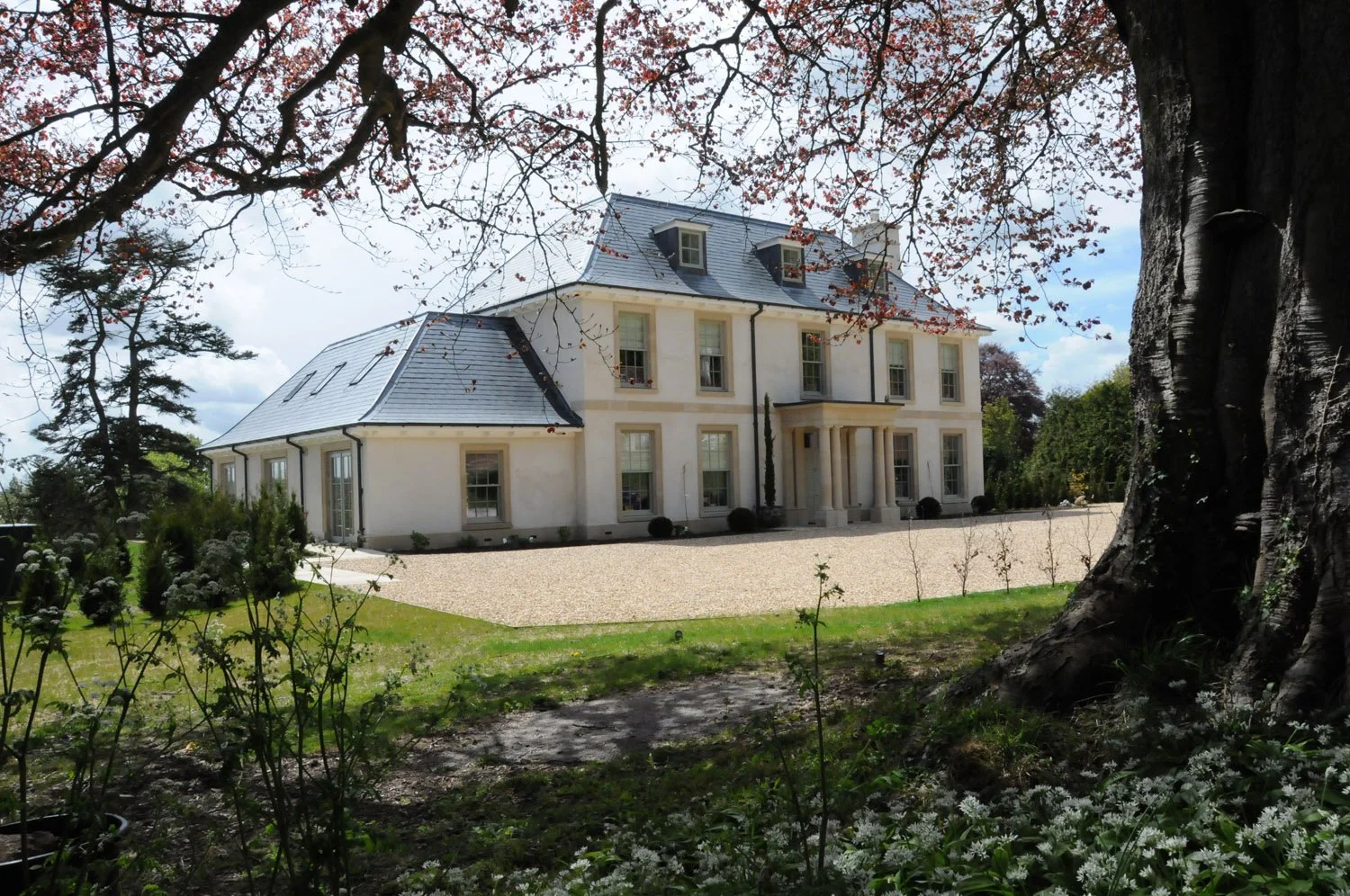
Traditional Architecture
Many of Britain's most loved buildings were constructed hundreds of years ago, yet they continue to feel relevant, attractive and desirable today.
This is not simply a matter of nostalgia.
Traditional architecture is often rooted in principles that transcend fashion: proportion, symmetry, hierarchy, craftsmanship and a strong relationship with place.
These buildings were typically designed to be coherent compositions, where each element contributes to the overall harmony of the design.
While construction methods and lifestyles may evolve, these fundamental principles remain as relevant today as they were centuries ago.
Good architecture does not need to imitate the past, but there is much we can learn from the buildings that have stood the test of time.
The house pictured is a new-build designed by ourselves, inspired by traditional architecture.
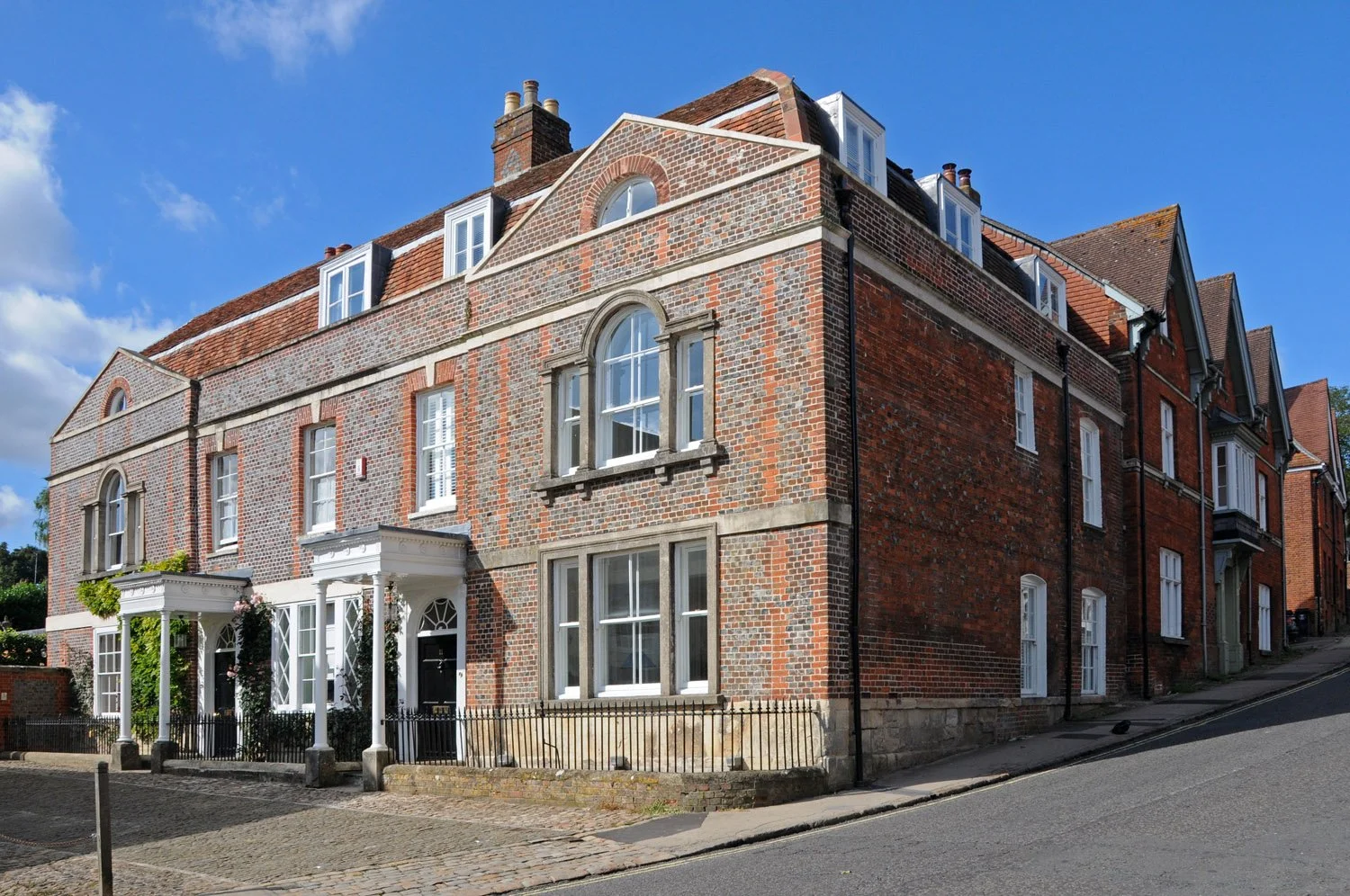
Lime Plaster & Mortar
Lime plaster and mortar are the backbone of traditional British architecture. Unlike modern cement-based alternatives, lime-based materials are flexible and breathable, making them ideal for historic buildings and sustainable new builds alike.
At Alex Oliver Associates, we use lime in our projects for the following reasons:
Allows buildings to ‘breathe’, preventing damp issues
More sustainable than cement-based products
Provides a softer, more authentic aesthetic
A timeless material for both heritage and contemporary homes.
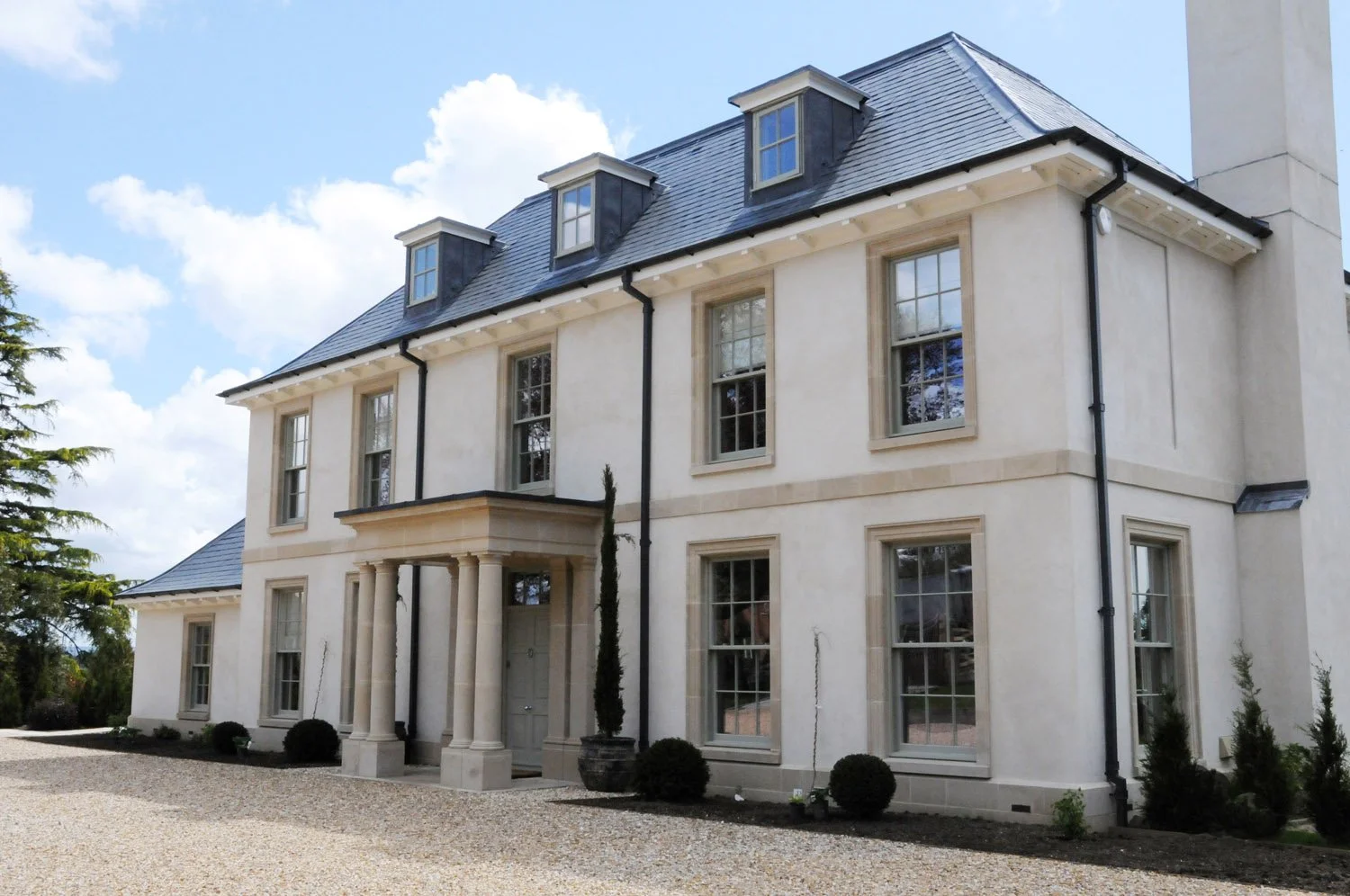
The English Country House
The English country house is a symbol of timeless elegance, and we take great pride in continuing this tradition through thoughtful, well-proportioned designs that respect historic character while meeting the needs of modern family life.
Our work at this house in the South Downs is a considered interpretation of the style, combining classical proportions with modern comforts and discreet technologies to support sustainable family living.
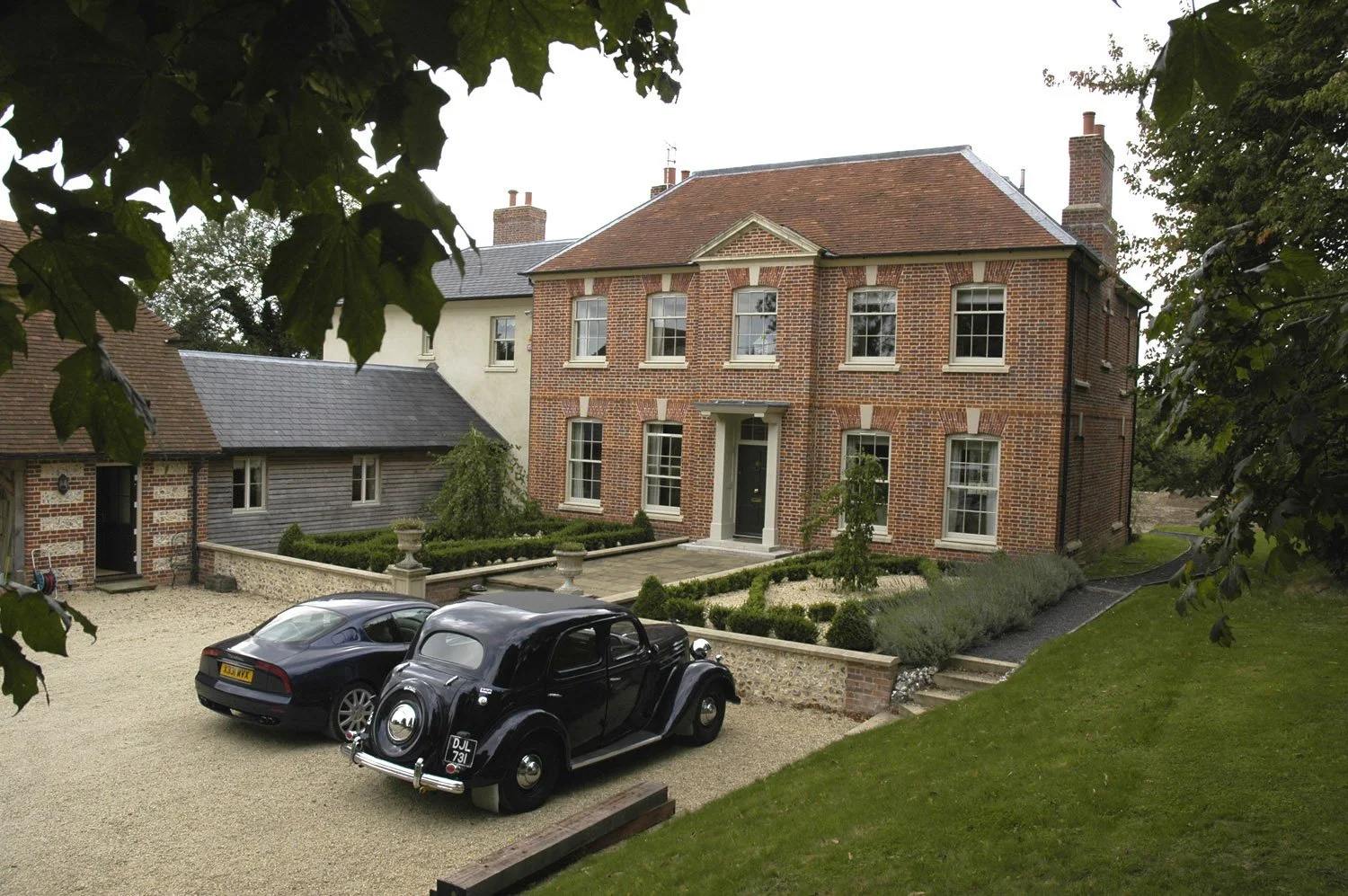
Timber Sash Windows
Timber sash windows are a defining feature of Britain’s architectural history, from elegant Georgian townhouses to Victorian terraces.
At Alex Oliver Associates, we prioritise high-quality, handcrafted timber sashes to maintain authenticity in restoration projects and traditional-style new builds.
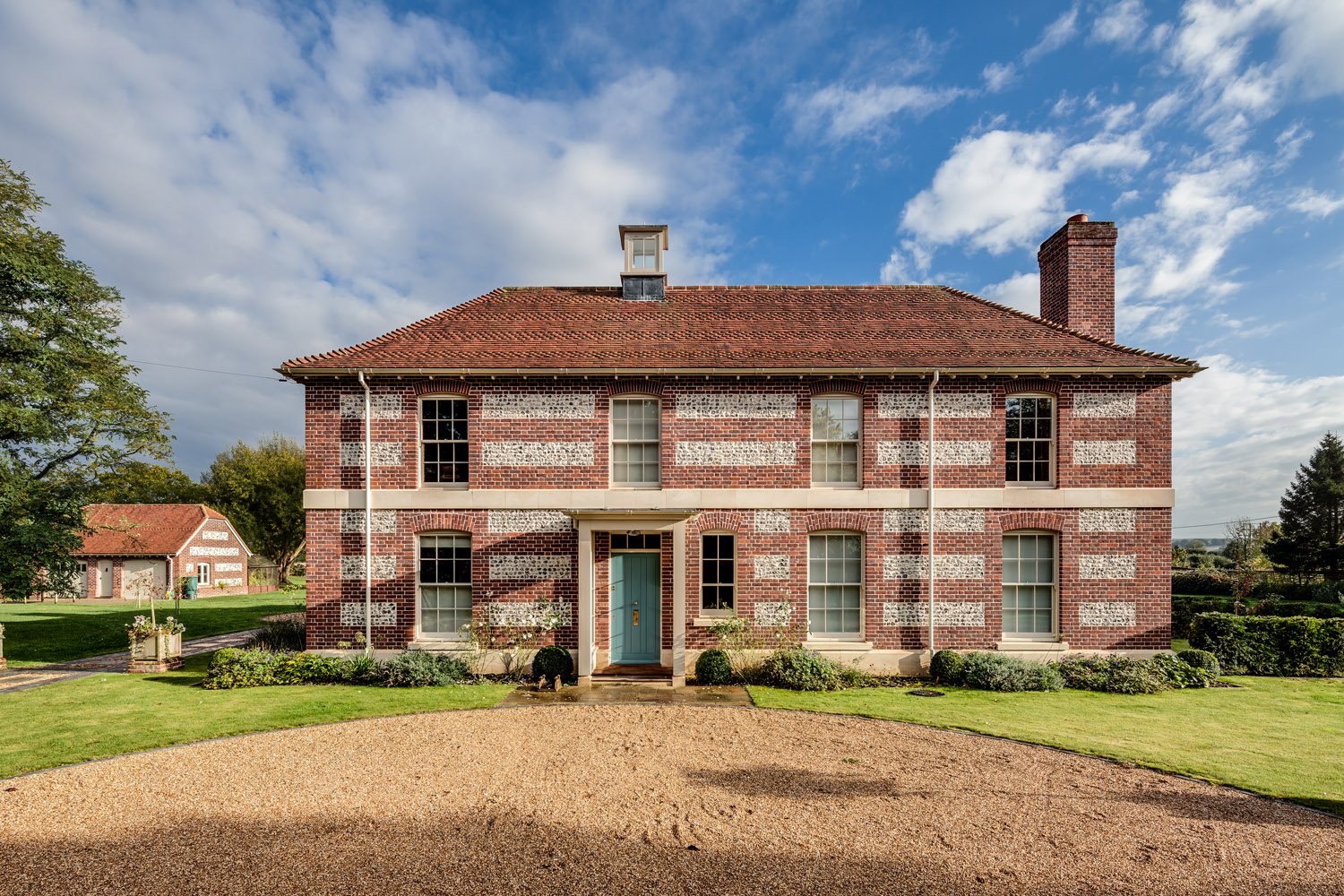
A Traditional Country House in Wiltshire
This country house was built using a carefully considered combination of flint, brick, and stone to create character and visual appeal.
Flint, which has long been a staple of British vernacular architecture, remains a popular choice for the following reasons:
Naturally strong and weather-resistant—ideal for British climates
A low-carbon material, sourced directly from local quarries
Distinctive visual appeal, particularly in contrast with brick and stone
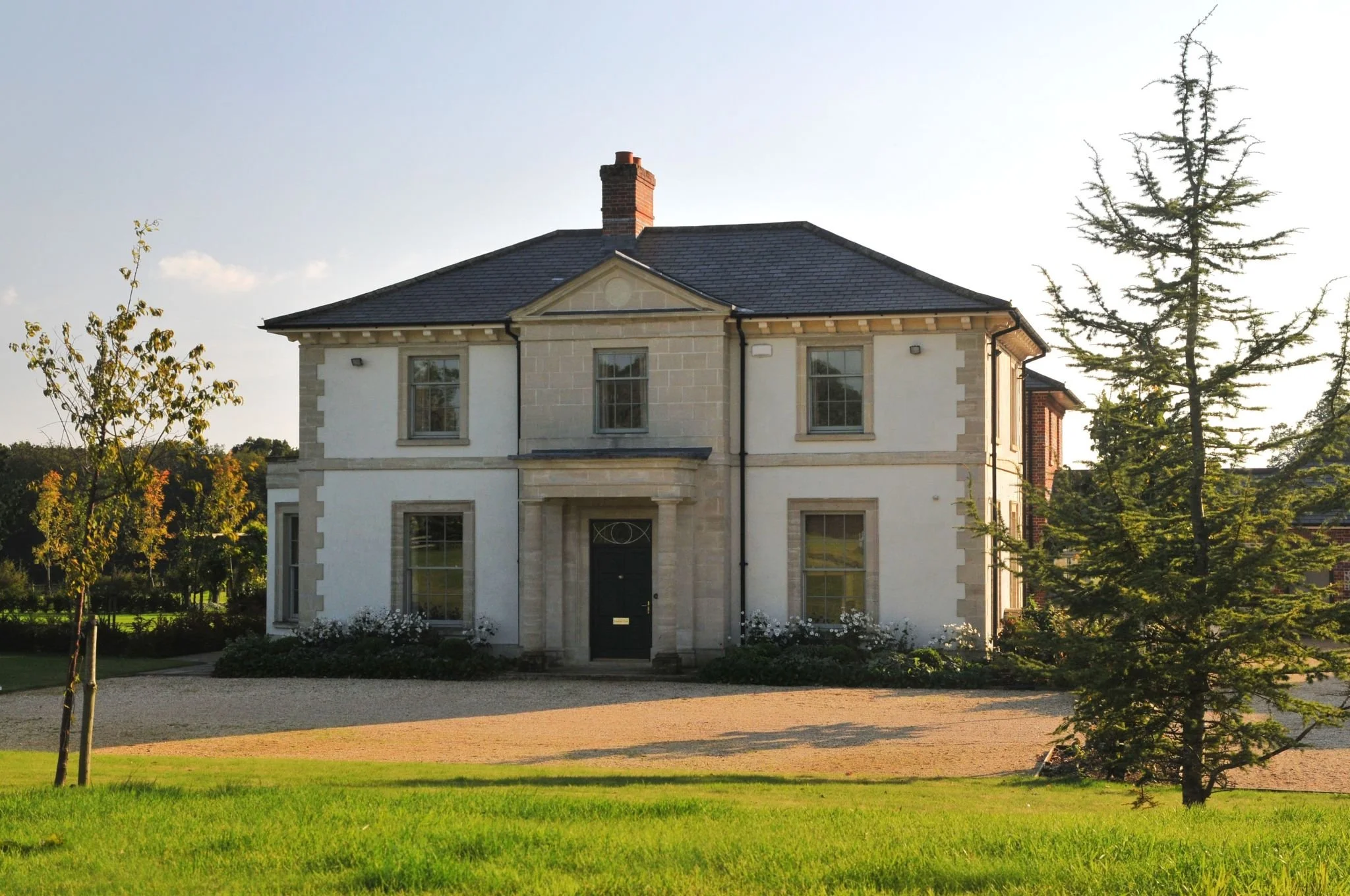
The Timeless Beauty of Natural Stone
Some of the most elegant homes are built from materials that stand the test of time.
Bath stone, sourced from a local quarry, was selected for this classical country house.
The natural stone brings warmth, texture and lasting quality to our design.

The Restoration of a Grade II* Listed Town House
This Grade II* listed Georgian townhouse, situated in a historic market town, required extensive external and internal restoration.
Over the past ninety years, the building has undergone various changes of use, resulting in the loss of many historic features.
We therefore undertook a sensitive restoration, carefully repairing the building’s historic fabric, removing the inappropriate modern partitions and reintroducing the elegance befitting the building’s Georgian heritage.
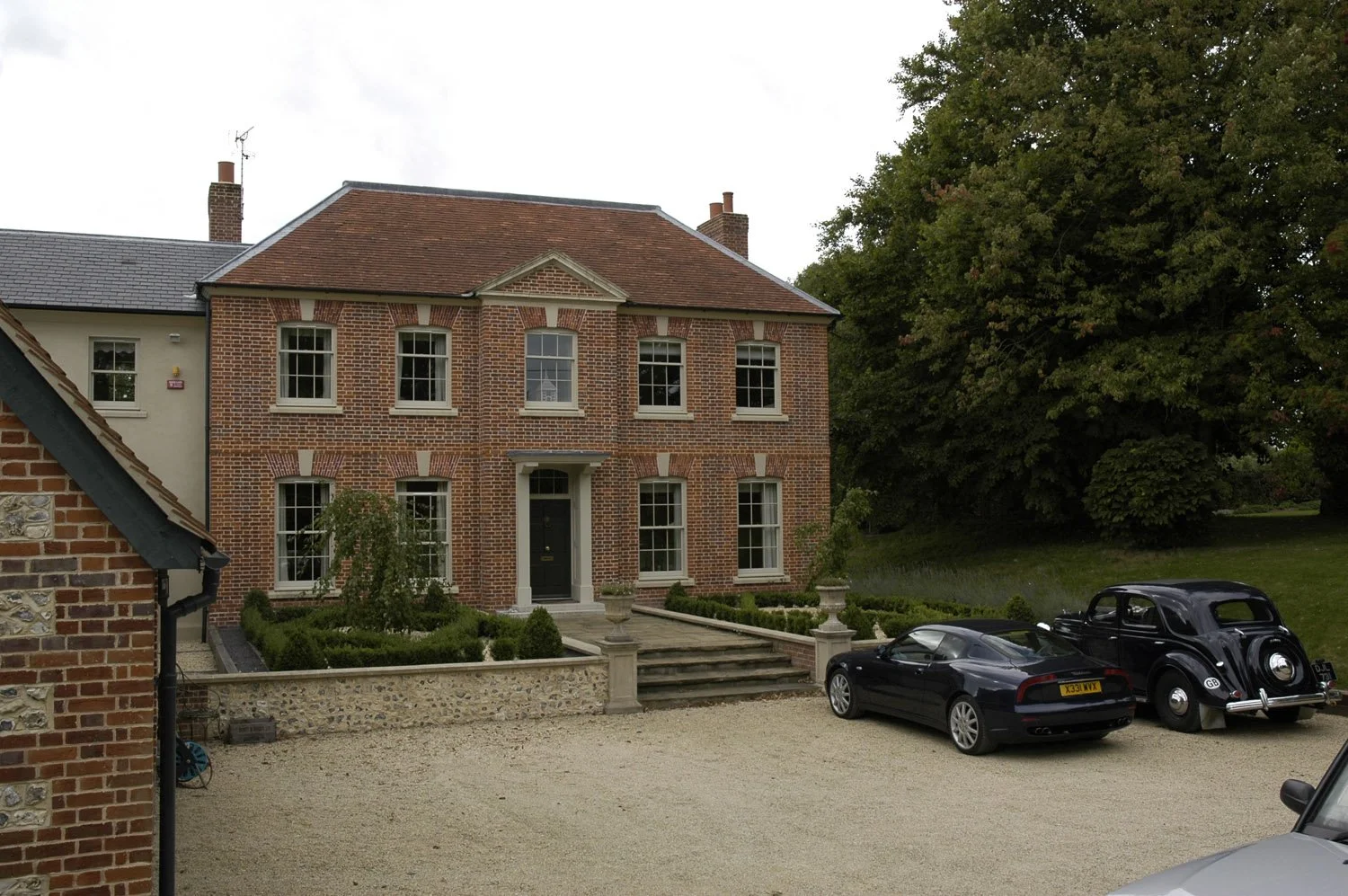
Replacement Dwellings
Replacement dwellings can present an exciting opportunity to transform a site and design a new home that responds the character of the local area.
The site of this elegant Georgian-style farmhouse in the Test Valley was previously occupied by an unappealing 1960s/70s house. The new farmhouse has been carefully designed to reflect the local vernacular character and to sit comfortably within this picturesque conservation area. The historic wing at the front of the house has been repaired and now serves as a charming annexe.
A Country House in Hampshire
Every design we produce is tailored to the site it is to be built on.
This stunning new country house in Hampshire is designed to make the most of its elevated position, with the kitchen featuring large glass windows which provide full, uninterrupted views to the south.
The external materials were carefully selected to harmonise the house with the surrounding landscape, which creates a sense of belonging.
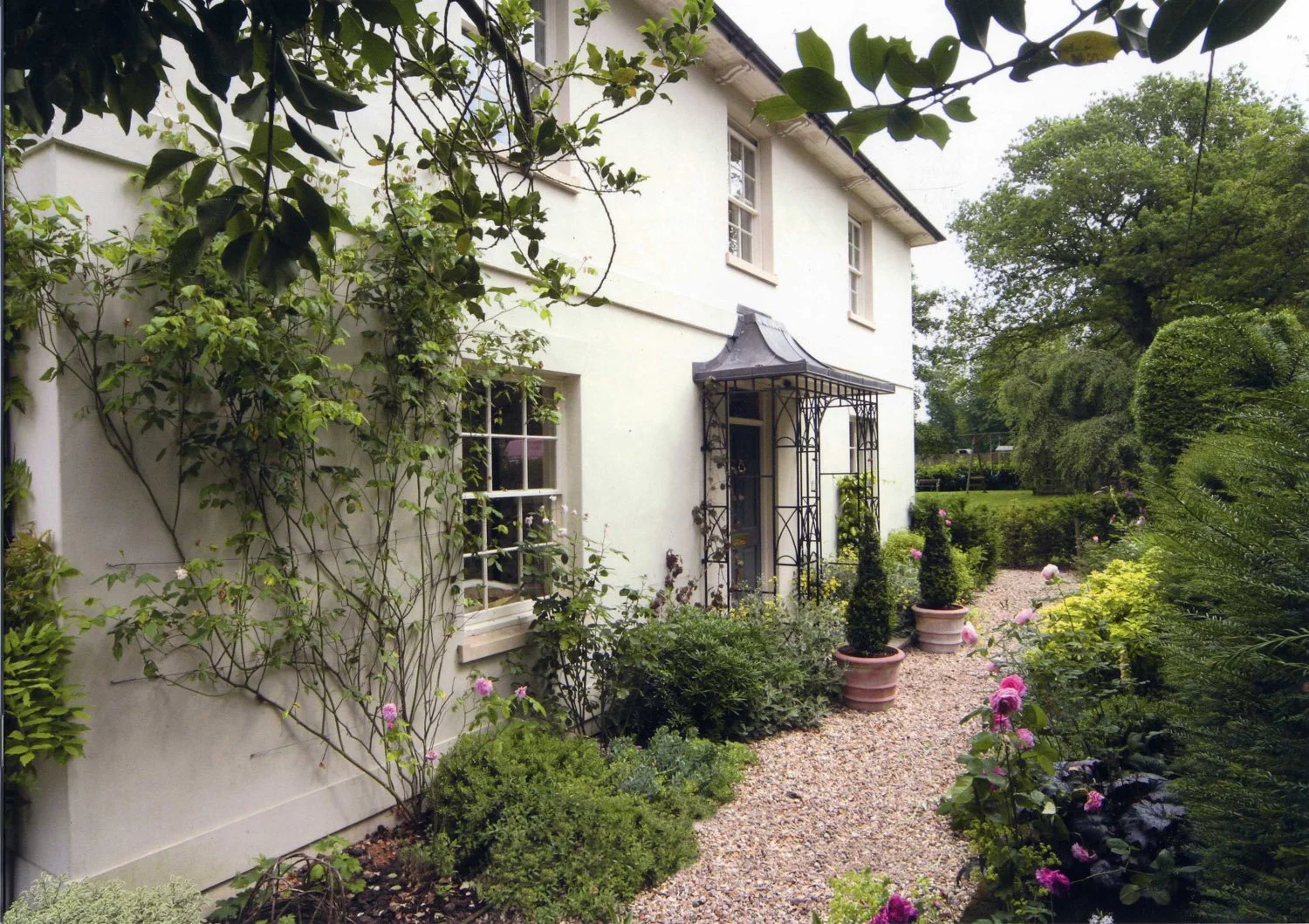
A Regency-Style Home in Wiltshire
This country house in Wiltshire combines classical elegance with modern functionality, resulting in a living space that honours tradition while embracing modernity. The front of the property is characterised by a formal, stucco-fronted façade that captures the grandeur and symmetry typical of Regency architecture. Well-proportioned windows and an elegant metal-lattice porch enhance the impression of refined sophistication.

Restoring and Transforming a Grade II Listed Barn
Our task was to transform this Grade II Listed barn into additional residential accommodation comprising a family room, playroom, cloakroom, and a self-contained guest annexe.
We prioritised preserving the historic character and integrity of the barn, sympathetically adapting the space for modern living.
Key historic features were left exposed, including the structural timber frame, trusses, plates, studs, and diagonal tiles.
The existing windows were replaced with bespoke timber windows designed to complement the original character of the barn.

Transforming Grade II Listed Townhouses
For this project in Marlborough, we transformed a pair of Grade II Listed buildings which had previously been used as a car dealership.
We treated the buildings as separate, and replaced the awkward 1970s single frontage with two distinct timber shopfronts.
The new shopfronts were carefully designed to be both visually appealing and more in keeping with the individual styles of these historic buildings.
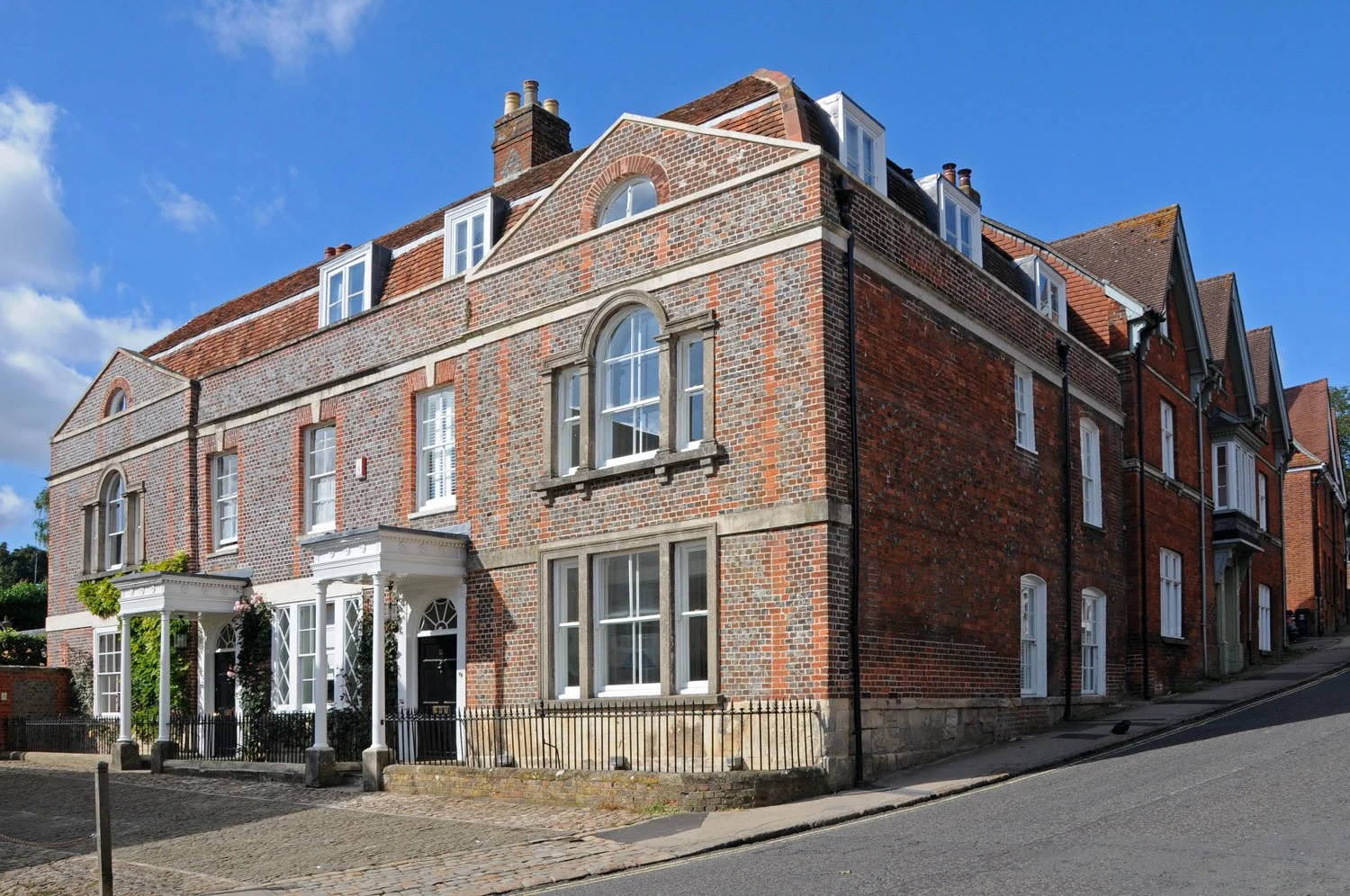
The Elegance of Lime Plaster and Lime Mortar
Lime plaster and mortar are the backbone of traditional British architecture. Unlike modern cement-based alternatives, lime-based materials are flexible and breathable, making them ideal for historic buildings and sustainable new builds alike.
Why we use lime in our projects:
Allows buildings to ‘breathe’—preventing damp issues
More sustainable than cement-based products
Provides a softer, more authentic aesthetic
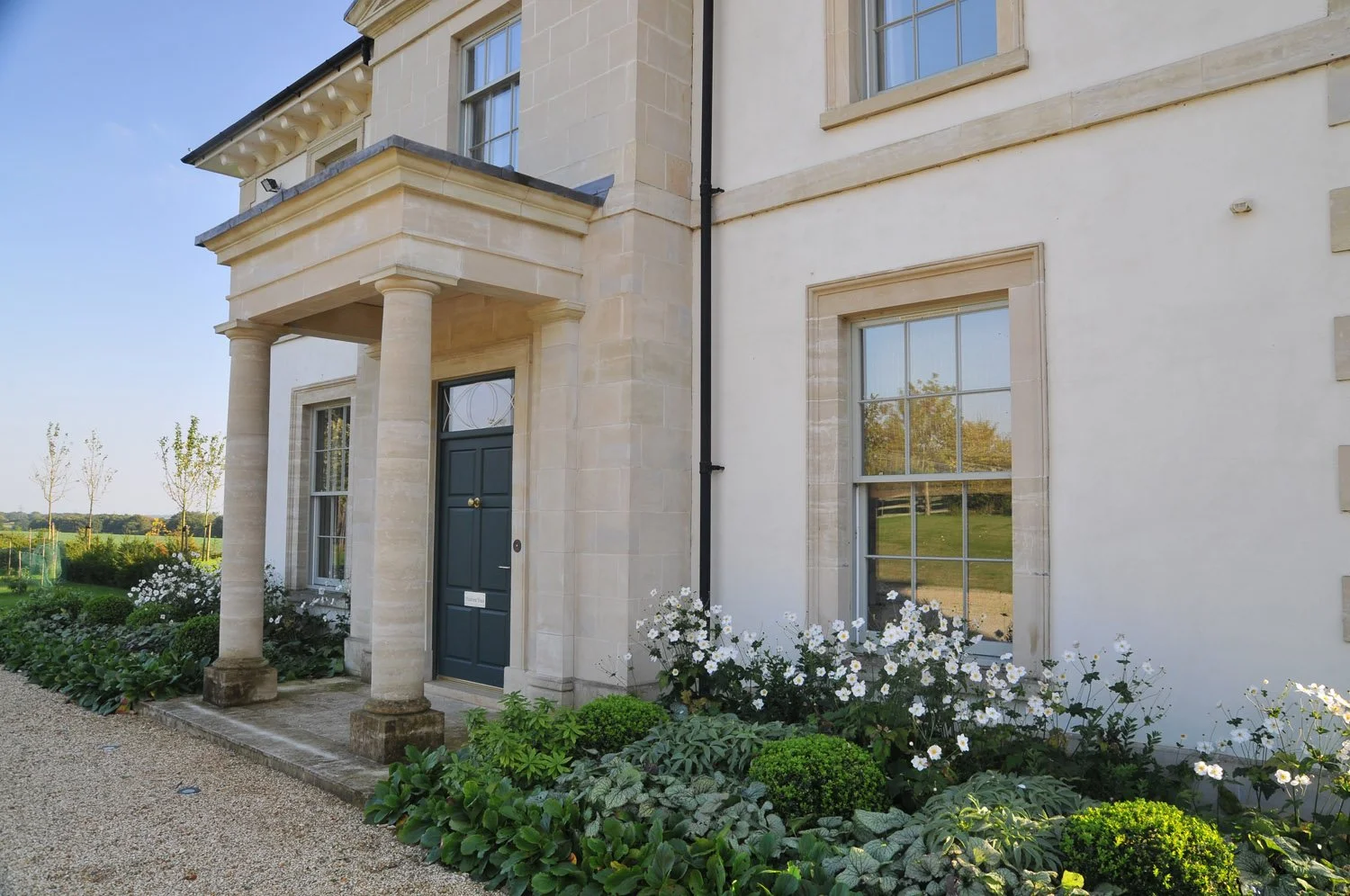
The Beauty of Natural Stone
Some of the most elegant homes are built from materials that stand the test of time. Natural stone brings warmth, texture, and durability to a design, and we love incorporating it into our projects.
Bath stone, sourced from a local quarry, was used to create a Doric portico for this classical country house.
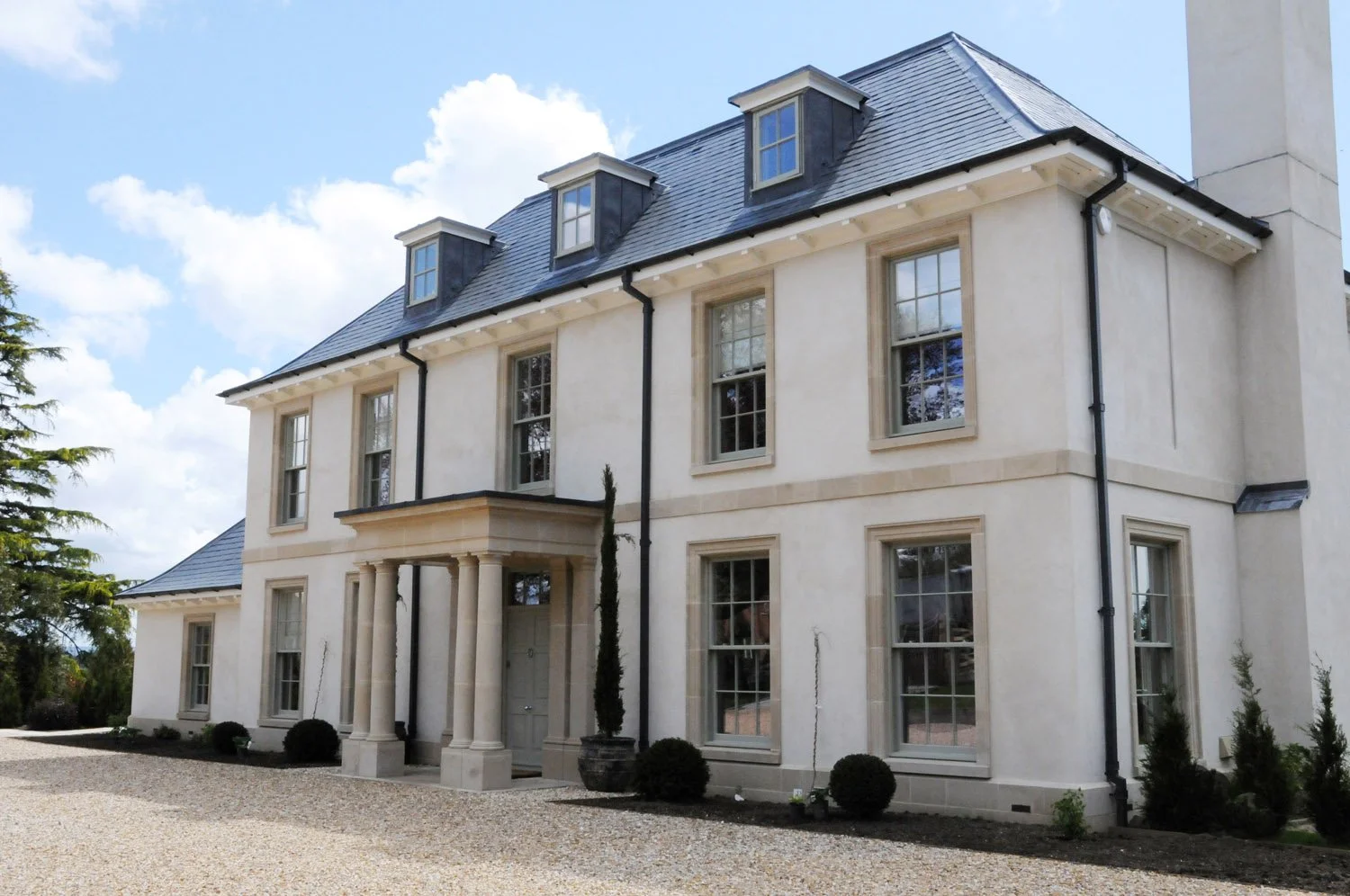
The Architectural Legacy of the English Country House
The English country house is a symbol of timeless elegance, and we take great pride in continuing this tradition through thoughtful, well-proportioned designs.
Our work at this house in the South Downs is a modern interpretation of this classic style.

Creating Character and Appeal
Flint has been a staple of British vernacular architecture for centuries, particularly in the South of England. Whether used in traditional flint-knapped walls or as a striking feature in contemporary builds, this locally sourced, highly durable material adds character and texture.
This Arts and Crafts style home demonstrates the distinctive visual appeal of flint, especially when placed in contrast with brick and stone.

A Classical Entrance Portico
Widely used in Ancient Greece the idea of a portico on classical buildings has influenced many design cultures since.
The addition of a portico to this award winning house in Wiltshire adds depth and interest to what could otherwise be a ‘flat’ elevation. The signification of the entrance helps draw the eye visually and practically provides a covered place to stand while the door is opened. Simple, elegant and effective.