
Natural Ventilation
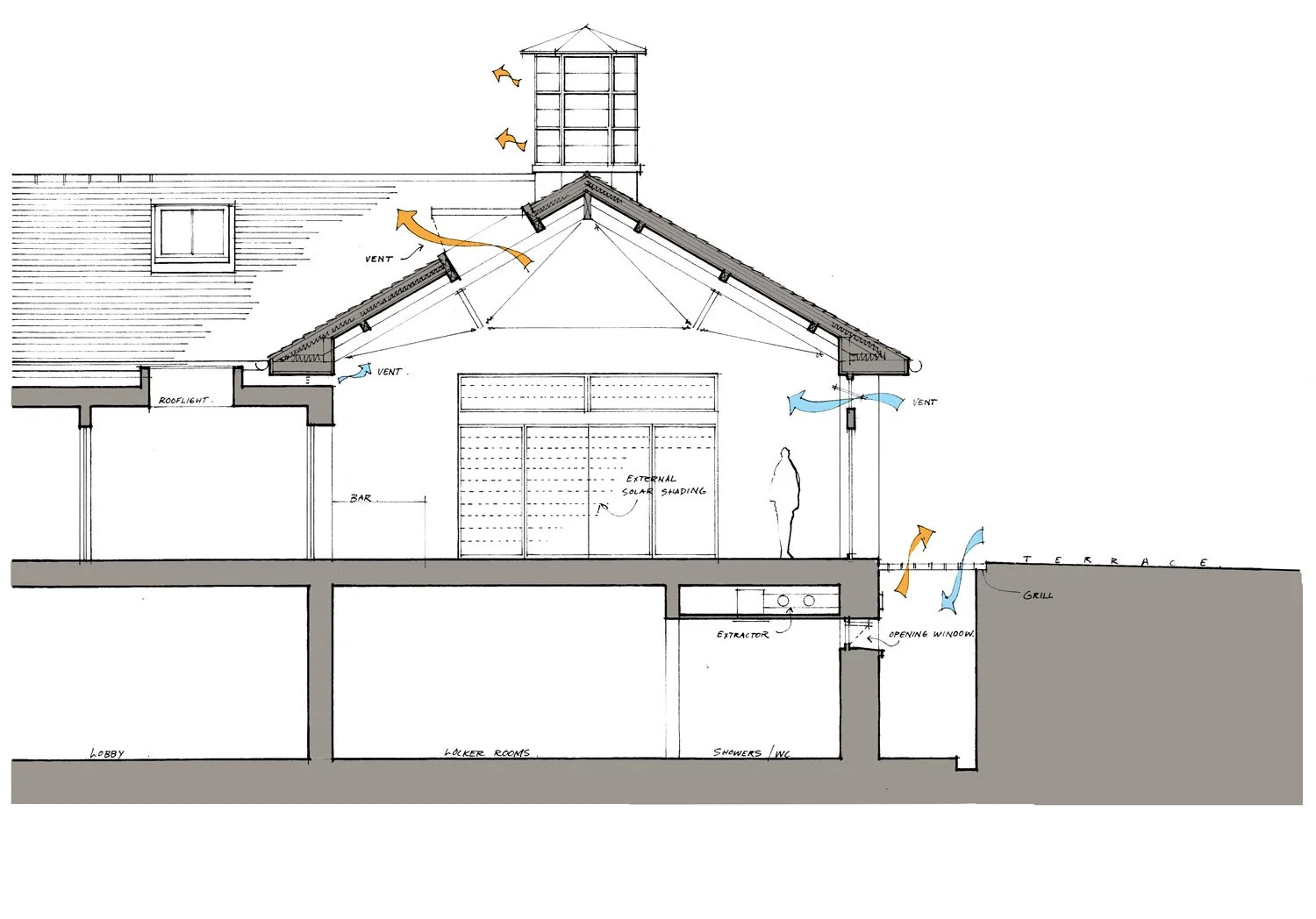
Natural ventilation remains one of the most effective ways to improve comfort within a building. Through carefully positioned windows, doors and rooflights, fresh air can move naturally through a home, helping to regulate internal temperatures and improve indoor air quality.
One of the most effective strategies is cross ventilation, where openings are positioned on opposing elevations to allow air to flow through the building. During warmer periods, this can help remove heat and create a more comfortable internal environment without relying on mechanical cooling.
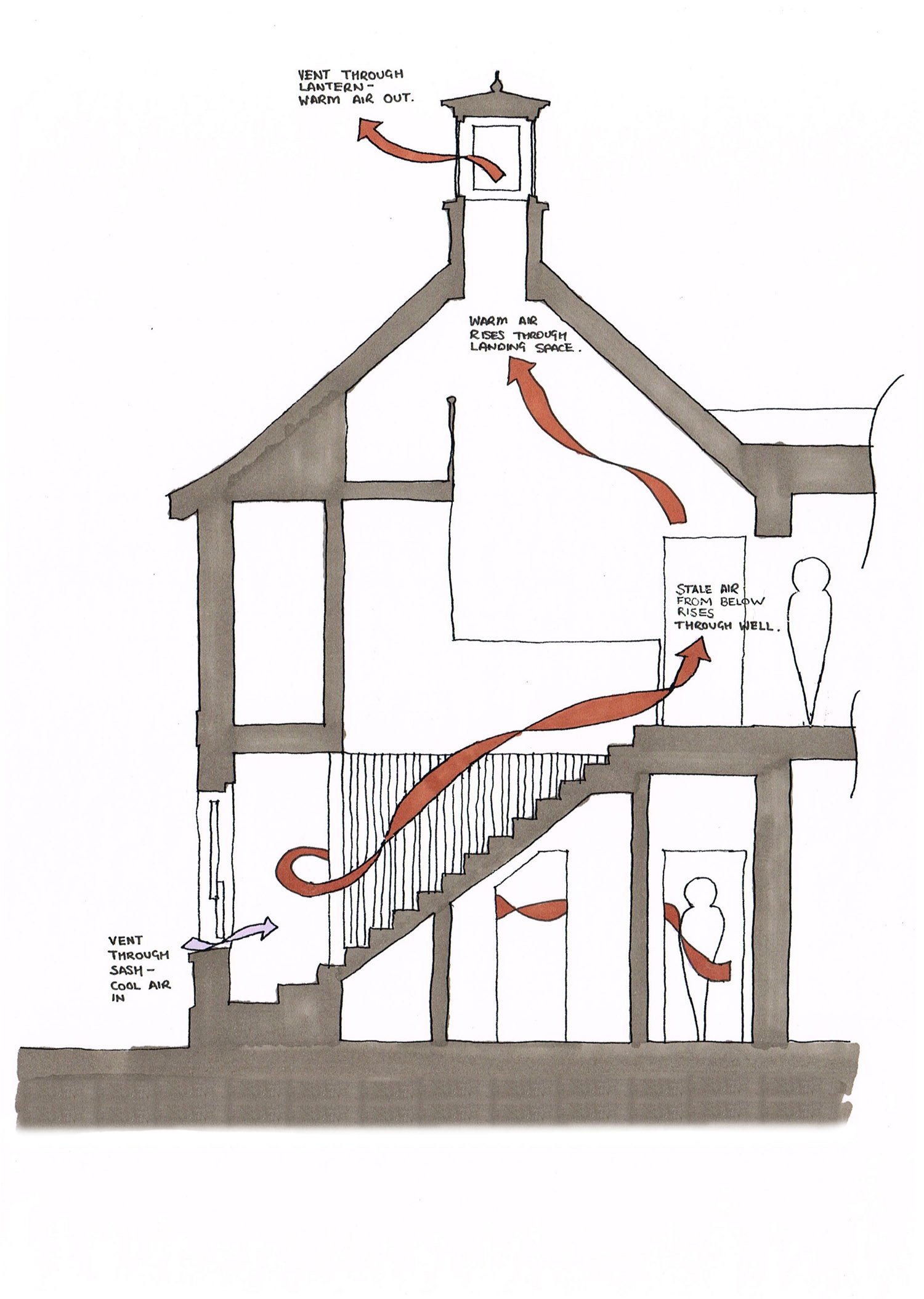
Another important principle is the stack effect. As warm air rises, it can escape through high-level openings such as rooflights, lanterns or stairwells, drawing cooler air into the building at lower levels. This natural movement of air can provide effective ventilation and cooling, particularly during summer months.
These principles have been used in buildings for centuries and continue to play an important role in sustainable design today.
At Alex Oliver Associates, we seek to incorporate these passive ventilation strategies into our designs wherever possible. By carefully considering building form, room arrangement and the position of openings from the outset, we can create homes that are comfortable, healthy and resilient, while reducing reliance on energy-intensive cooling systems.
Sustainability starts with good design.
Designing Homes for a Changing Climate
For much of the last century, the design of homes in the UK has focused on the challenge of keeping the occupants warm.
Improved insulation, increased airtightness and more energy-efficient construction have helped reduce heat loss and improve winter comfort. However, as our climate changes and summer temperatures continue to rise, a new challenge is becoming increasingly important: preventing buildings from overheating.
Recent periods of prolonged hot weather have highlighted the need to think differently about environmental design. A home that performs well in January must also remain comfortable in July.
Factors such as orientation, glazing design, solar gain, ventilation and external shading all influence how a building responds to warmer conditions. Decisions made at the earliest stages of design can have a significant impact on comfort throughout the life of a building.
Historically, buildings often relied on passive measures such as deep window reveals, high ceilings, shutters and natural ventilation to moderate internal temperatures. Many of these principles remain just as relevant today.
At Alex Oliver Associates, we seek to incorporate these passive design principles into our projects from the earliest stages of the design process. Careful consideration is given to building orientation, the arrangement of rooms, natural daylight, solar gain and ventilation strategies to help create comfortable homes that respond to both their site and the changing climate.
Addressing overheating should not be viewed as an afterthought or something solved solely through technology. Thoughtful architecture can reduce reliance on mechanical cooling, improve comfort and create homes that are better equipped to respond to our changing climate.
Sustainability starts with good design.